Deep-Frying a Turkey Safely: Oil Level, Thawing, Temperatures, and When to Choose an Oil-Free Fryer Instead
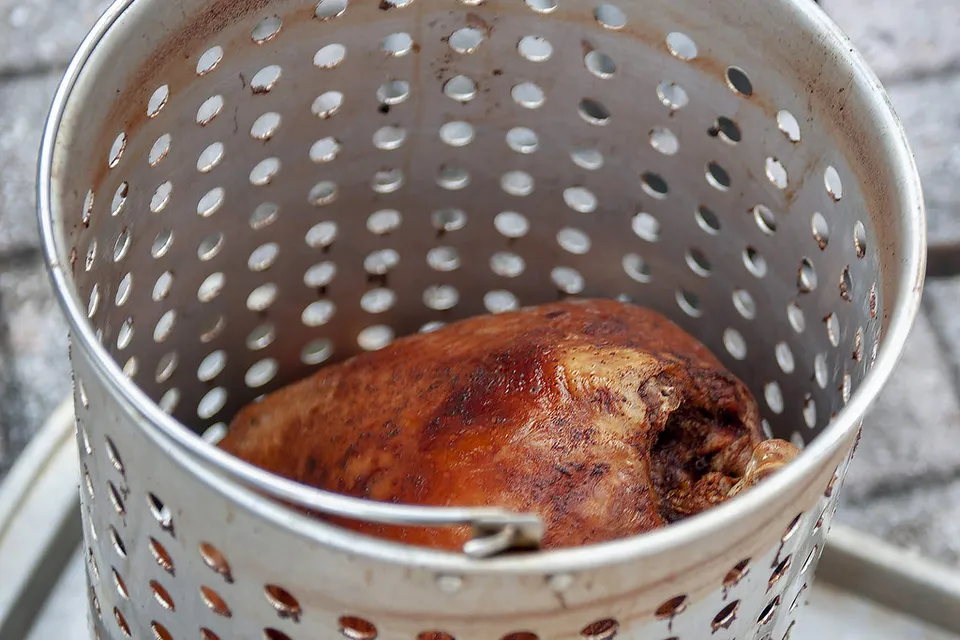
A deep-fried turkey cooks in under an hour, has crackling skin and frees the oven. It is also the one holiday method fire services openly try to talk people out of. Nearly every accident comes down to too much oil, a bird that is not fully thawed, a fryer in the wrong place, or a cook who walks away. Here is how to avoid each, and when an electric or oil-free fryer is the better choice.
Why Thanksgiving is the riskiest day in the kitchen
More home cooking fires happen on Thanksgiving than on any other day of the year. According to figures from the National Fire Protection Association reported by Carrier Management, an estimated 1,139 home cooking fires were reported to US fire departments on Thanksgiving Day 2024, a 321 percent increase over the daily average. The NFPA's own cooking-fire podcast episode describes Thanksgiving as "the day with by far the most cooking fire incidents of any day on the calendar."
Most of those fires start on stoves and ovens, not in turkey fryers, but a fryer concentrates every risk in one place: gallons of oil far above the boiling point of water, an open flame, a heavy wet bird and a crowd nearby. The same NFPA statement discourages oil-filled turkey fryers altogether because they "can cause devastating burns," and suggests an infrared fryer, an air fryer or an electric turkey fryer instead. The US Fire Administration's cooking fire guidance notes that unattended equipment was the leading factor in nonconfined home cooking fires, at 37 percent, which is exactly the habit a long outdoor fry encourages.
What actually happens when a fryer boils over
Water is denser than oil. When ice or water from a turkey meets oil at 350 °F, it sinks, flashes into steam and expands violently. As chemist Kristine Nolin of the University of Richmond put it, in a passage quoted by NPR, "the volume expands by 1,700 times," pushing hot oil up and over the rim. In her longer explainer for PBS NewsHour, she notes that the vast majority of these accidents happen because people put frozen turkeys into hot oil.
The spilled oil runs onto the burner, the flame ignites it and the fire climbs back up the pot in seconds. A pot that is merely too full does the same even with a perfectly thawed bird, because the turkey's volume pushes the oil over the edge.
Before frying day: the bird and the oil
Thaw completely, and early
A frozen turkey takes days, not hours, to thaw in the refrigerator: at least a day for every 5 pounds, so a large bird bought frozen at the weekend may only just be ready on Thursday. Our guide to thawing meat, poultry and fish safely gives the timings. Check the cavity for ice, remove the giblets and neck, and pat the bird dry inside and out.
Respect the maximum bird weight in your fryer's manual; for a big gathering, two smaller birds are easier and safer than one giant one.
The water test for the oil level
This is the single most useful step, and it must be done before any marinade, rub or injection goes on. University of Georgia Extension, following the National Turkey Federation's method, describes it like this in its turkey frying guidance:
- Put the thawed turkey in the fryer basket and set the basket in the empty pot.
- Add water until it covers the turkey by 1 to 2 inches. The National Park Service's fire prevention article suggests about half an inch; either way, the water should sit well below the rim.
- Lift out the turkey and mark the water level, or measure the distance from the rim to the surface with a ruler.
- Pour out the water and dry the pot and the turkey thoroughly. Fill the pot with oil to your mark, never higher.
Choose an oil with a high smoke point, such as refined peanut or canola oil, and tell your guests which oil you used, so anyone with a peanut allergy can decide for themselves.
Setting up the fryer
The NPS article lists the reasons both the NFPA and UL, which does not certify open-flame turkey fryers, discourage them: the units tip easily, overfilling is common, many have no thermostat, and rain or snow falling into hot oil turns to scalding steam. If you go ahead, the set-up rules are short and non-negotiable:
- Outdoors only, on flat ground far from the house, fences and branches; never on a wooden deck, under a covered patio or in a garage.
- A clear zone that children and pets do not enter; UGA Extension warns the oil stays dangerously hot for hours.
- Protective gear: long sleeves, insulated gloves, safety glasses, and a grease-rated extinguisher within reach.
Frying, step by step
- Heat the oil slowly with a long-stem frying thermometer clipped to the pot. UGA Extension suggests 365 to 375 °F; many fryer manuals use 350 °F. A large pot can take 45 minutes to an hour to get there. If the oil starts to smoke, turn the gas off.
- Turn off the burner before the turkey goes in. With no flame, a little overflow is a mess rather than a fire.
- Lower the bird slowly on its hook, pausing if the oil bubbles up hard.
- Relight and bring the oil back to temperature. UGA Extension allows approximately 3 minutes per pound; follow your fryer's manual and the thermometer rather than the clock.
- Stay with the fryer the whole time.
- Turn off the gas again, lift the bird out slowly, let it drain over the pot, and rest it for 20 minutes before carving.
Is it cooked?
The skin browns long before the centre is safe, so check the thickest part of the breast and the innermost thigh with an instant-read thermometer. US food-safety guidance sets 165 °F (74 °C) as the minimum for all poultry, and many cooks take thighs further for texture; our safe internal temperature chart explains where to put the probe. Never stuff a turkey you intend to fry. The UGA leaflet still quotes 180 °F for the thigh, a doneness preference rather than the safety minimum.
If the oil catches fire
- Never pour water on it: that is the same steam explosion, only bigger.
- Turn off the gas at the tank if you can reach it safely.
- Use an extinguisher rated for grease fires, aiming at the base of the flames, or smother small flames with the lid if you can do so without reaching over the pot.
- If the fire is spreading or you are in doubt, move everyone away and call 911.
Safer ways to get a similar result
| Method | How it works | Trade-offs |
|---|---|---|
| Electric indoor turkey fryer | A thermostat-controlled pot with a fraction of the oil, no open flame | Limited to smaller birds; still a large volume of hot oil on a counter |
| Oil-free infrared "fryer" | Propane heats the walls of a drum that roast the bird with radiant heat | No oil to boil over; skin less uniformly crisp; still outdoor propane |
| Spatchcock and roast hot | Backbone removed, bird flattened and roasted at high heat | Done in about the time of frying, very crisp skin, no special kit |
| Grill or smoker, indirect heat | Bird cooked away from the coals or burners | Frees the oven; see our guide to two-zone grilling |
The NPS article recommends an electric fryer without an open flame, or a bird cooked by a grocer or restaurant with professional equipment.
Turkey fryer checklist
- Water test done, oil line marked, before any marinade goes on.
- Bird fully thawed, giblets out, patted dry, within the weight limit in your fryer's manual.
- Fryer on flat ground, outdoors, far from the house; never on a deck or in a garage.
- Thermometer on the pot, extinguisher at hand, burner off while lowering and lifting.
- Breast and thigh checked with a thermometer: at least 165 °F.
Sources
- National Fire Protection Association figures on Thanksgiving cooking fires (2024), as reported by Carrier Management on 16 November 2026, and NFPA's cooking-fire podcast episode.
- US Fire Administration, cooking fire safety page.
- NPR (22 November 2023) and PBS NewsHour (Kristine Nolin, from The Conversation) on why frozen turkeys make hot oil boil over.
- University of Georgia Cooperative Extension and National Park Service turkey-fryer safety guidance (water test, oil temperature, set-up rules, alternatives).
- All pages consulted on 21 November 2026.
 Ingredients & technique
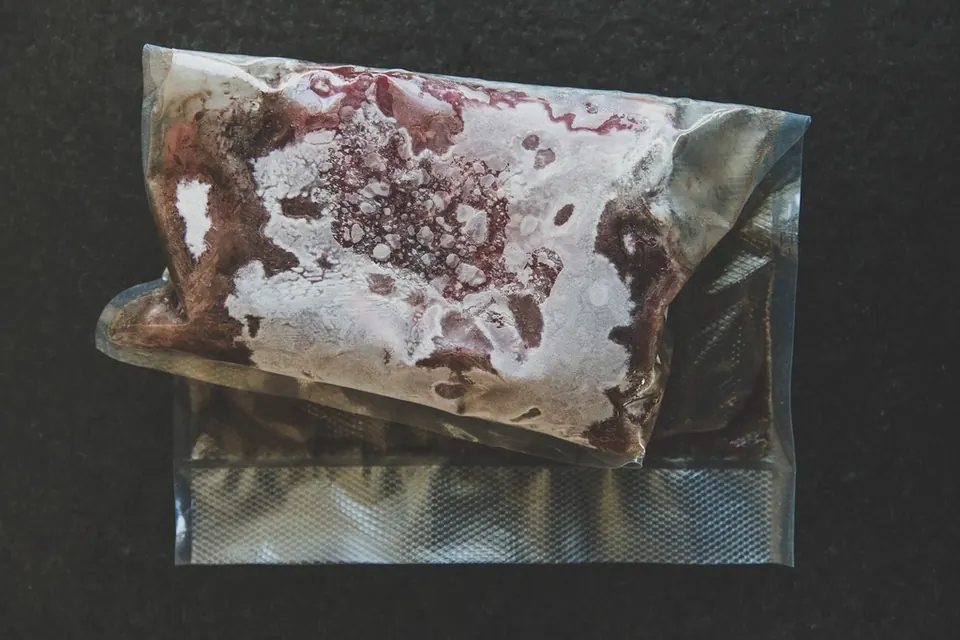
Thawing meat safely
Fridge, cold water or microwave, never the counter: timings, keeping times and the refreezing rules.
 Ingredients & technique
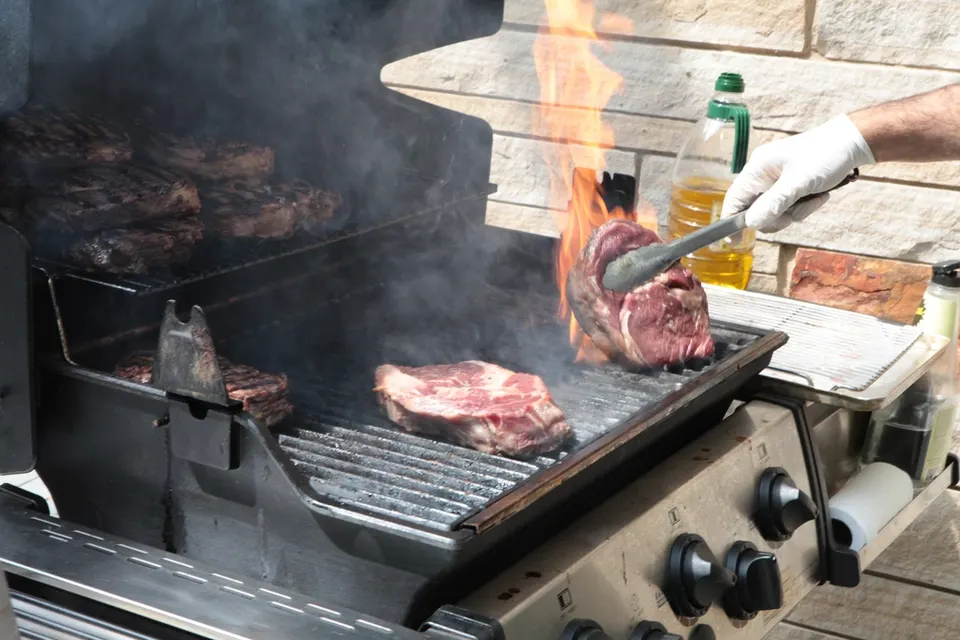
Safe internal temperatures
145, 160 or 165 °F? The temperature chart for meat, poultry and fish, why the UK does it differently, and where the probe should go.
 Ingredients & technique
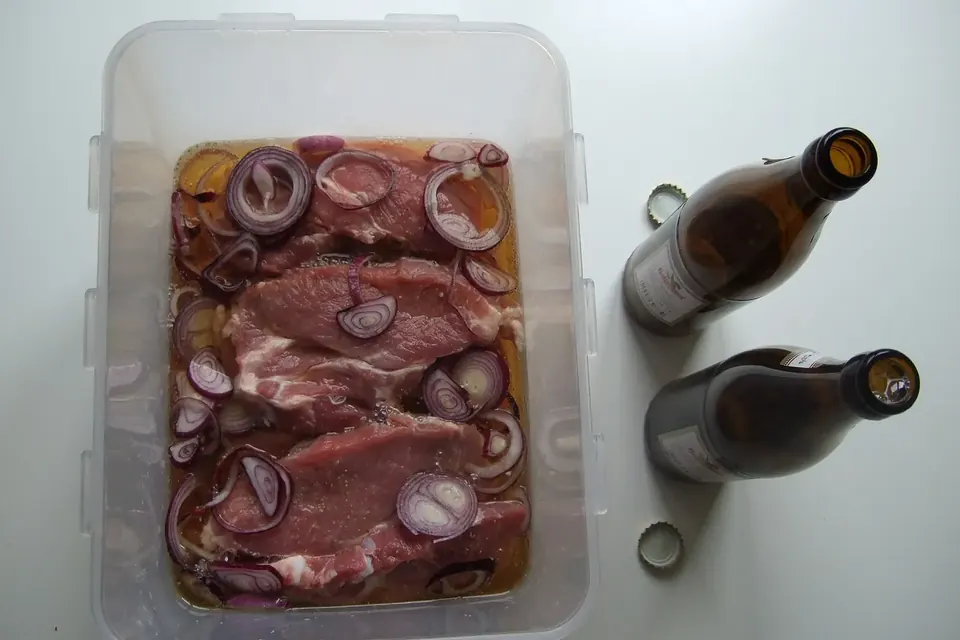
Marinades and brines, explained
Salt works deep, acid and fruit enzymes work on the surface and can overdo it: how long to marinate, how to brine, and how to handle raw-meat marinade safely.