Safe Internal Temperatures for Meat, Poultry and Fish: The Chart, the Rest Time and How to Take a True Reading
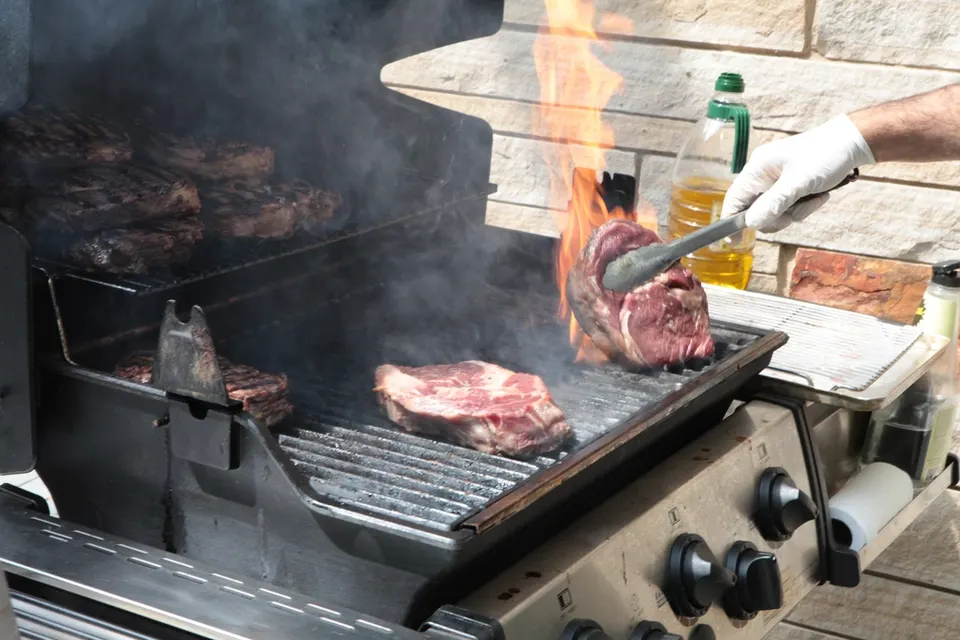
Cutting into a chicken leg to look for pink juice, pressing a steak with a finger, waiting until the burger "looks done": most home cooks judge doneness by eye. Food-safety agencies agree that this is the weak point. The only test that tells you whether the centre of a piece of meat has reached a safe temperature is a thermometer in the right place. Here are the numbers, where they come from, and how to take a reading you can trust.
Why the inside is what counts
Bacteria such as Salmonella, Campylobacter and the harmful strains of E. coli are killed by heat, but only when the heat actually reaches them. On a whole steak or a leg of lamb, contamination sits on the surface, so searing the outside deals with it. Mincing, rolling, skewering or tenderising with blades drags the surface into the middle, and poultry and pork can carry bacteria throughout the flesh. That is the logic behind every rule below: the more the meat has been handled or broken up, the more the centre matters.
The US chart
The US Department of Agriculture publishes safe minimum internal temperatures, repeated on the federal FoodSafety.gov chart. The Celsius figures here are conversions, rounded to the nearest degree.
| Food | Minimum internal temperature | Rest |
|---|---|---|
| Beef, veal, lamb, goat: steaks, chops, roasts | 145 °F (63 °C) | 3 minutes |
| Pork: chops, roasts, tenderloin | 145 °F (63 °C) | 3 minutes |
| Fresh or smoked raw ham | 145 °F (63 °C) | 3 minutes |
| Fully cooked ham, reheated | 140 °F (60 °C) if packaged in a USDA-inspected plant, otherwise 165 °F (74 °C) | None |
| Minced beef, pork, lamb, veal; sausages | 160 °F (71 °C) | None |
| All poultry: whole birds, pieces, minced, stuffing | 165 °F (74 °C) | None |
| Egg dishes | 160 °F (71 °C) | None |
| Fin fish | 145 °F (63 °C), or until opaque and flaking | None |
| Leftovers and casseroles | 165 °F (74 °C) | None |
For shellfish the chart uses signs rather than numbers: prawns, lobster, crab and scallops are done when the flesh is pearly or white and opaque; clams, mussels and oysters when the shells open. Discard any that stay shut.
Why the three-minute rest is part of the number
Killing bacteria is a matter of temperature and time together, not of a single magic figure. A steak or roast that reaches 145 °F keeps rising for a while after it leaves the heat, and stays hot inside; the US guidance counts those three minutes as part of the safety process. Minced meat and poultry have no rest in the chart because their targets are already high enough to be effective almost instantly.
The rest also matters for cooking: a large roast can climb several degrees as heat from the outer layers moves inwards, so pulling it a little before your eating target and resting it gives a more even result. For the safety figure, read the temperature at the end of the rest if you are in doubt.
The UK approach: time and temperature
The UK Food Standards Agency frames the same principle differently. In its guidance Cooking your food, the middle of the food should reach 70 °C for two minutes, or one of these combinations:
| Core temperature | Hold for |
|---|---|
| 60 °C | 45 minutes |
| 65 °C | 10 minutes |
| 70 °C | 2 minutes |
| 75 °C | 30 seconds |
| 80 °C | 6 seconds |
The table explains why a very slow roast or a water bath can be safe at a lower temperature than the chart suggests, provided the centre is held there long enough, and why a quick check at 75 °C is enough on the grill. The FSA is also stricter than the US on one point: it asks for pork to be cooked through, with no pink, as well as poultry, mince, sausages, burgers, kebabs, rolled joints and offal. Whole cuts of beef and lamb can be served pink inside, as long as the outside has been seared and has changed colour all over. Burgers should not be served rare or pink at home.
Where to put the probe
- Thickest part, true centre. Push the tip into the middle of the thickest section. On a steak or chop, go in from the side so the tip sits halfway through the thickness rather than near the bottom.
- Avoid bone, fat and gristle. Bone conducts heat and gives a falsely high reading; fat pockets can read differently from the meat around them.
- Whole poultry: check the thickest part of the thigh, close to but not touching the bone, and the thickest part of the breast. The FSA points to the leg between the drumstick and the breast as the slowest part of a bird. If the bird is stuffed, the centre of the stuffing must reach 165 °F (74 °C) too.
- Burgers and thin cuts: insert sideways from the edge towards the centre.
- Several pieces: check the largest one, and more than one if sizes vary. On a grill, the pieces nearest the hottest zone finish first; our guide to two-zone grilling shows how to move them to gentler heat while the thick ones catch up.
- Wait for the number to settle. Instant-read digital thermometers take a few seconds; dial types take longer.
Wash or wipe the probe between raw and cooked readings so that it does not carry bacteria back into food that is already done.
Is your thermometer telling the truth?
A thermometer that reads five degrees low is worse than none, because it gives false confidence. The simplest check uses a glass packed with ice and topped up with cold water: stir, wait a minute, then insert the probe without touching the glass. It should read 32 °F (0 °C). Boiling water is less useful as a check because its temperature falls with altitude. If yours is off and cannot be recalibrated, note the difference or replace it. Our comparison of the iGrill 2 and iGrill 3 walks through the same tests for wireless probes.
Why colour and juices are not enough
Visual cues are a fallback, not a measurement. The FSA lists them for cooks without a thermometer: steam from the centre, no pink meat in poultry or pork, juices running clear. But both agencies recognise their limits. Minced beef can turn brown inside before it reaches a safe temperature, particularly if it was frozen or stored for a while, and properly cooked poultry can remain pink, especially when smoked or grilled. A thermometer settles the question either way.
Two more habits close the loop. Meat that was frozen has to be fully thawed before cooking or given extra time, or the centre lags behind the surface; see how to thaw meat safely. And when you reheat leftovers, the target is back to 165 °F (74 °C), or steaming hot all the way through.
Thermometer checklist
- Whole cuts of beef, pork, lamb: 145 °F (63 °C), rest 3 minutes (UK: pork cooked through).
- Mince, sausages, burgers: 160 °F (71 °C).
- Poultry and stuffing: 165 °F (74 °C), thigh and breast.
- UK benchmark: 70 °C for 2 minutes, or 75 °C for 30 seconds.
- Probe in the thickest part, away from bone; sideways on thin cuts.
- Ice-water check: 32 °F (0 °C).
- Clean the probe between raw and cooked.
Sources
- FoodSafety.gov (US Department of Health and Human Services, with USDA FSIS), Safe Minimum Internal Temperature Chart, consulted November 2026.
- Food Standards Agency (UK), Cooking your food, consulted November 2026.
- US Department of Agriculture, Food Safety and Inspection Service, Kitchen Thermometers and Color of Meat and Poultry.
 Grill & smoke
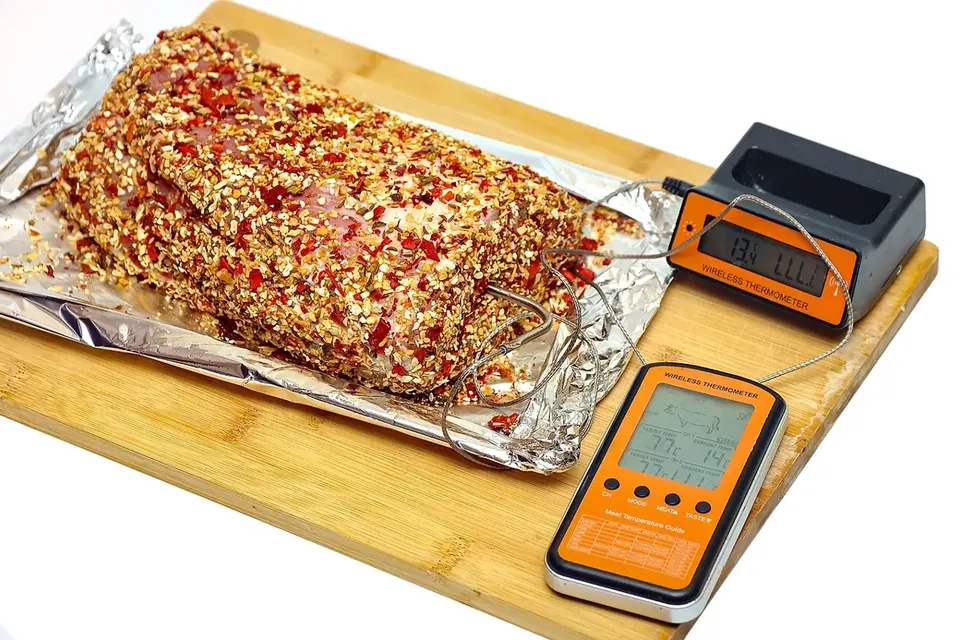
iGrill 2 vs iGrill 3
Standalone versus grill-mounted, probes, battery and app, plus a ten-minute accuracy check for any probe.
 Grill & smoke
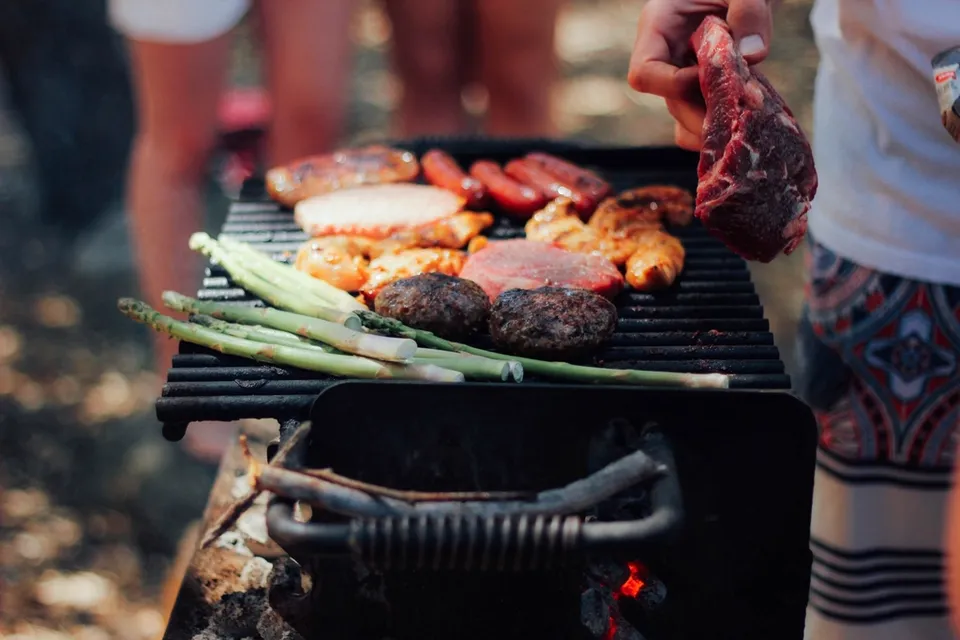
Two-zone grilling
One hot side, one cool side: how to set it up on charcoal or gas, and what to cook where.
 Ingredients & technique
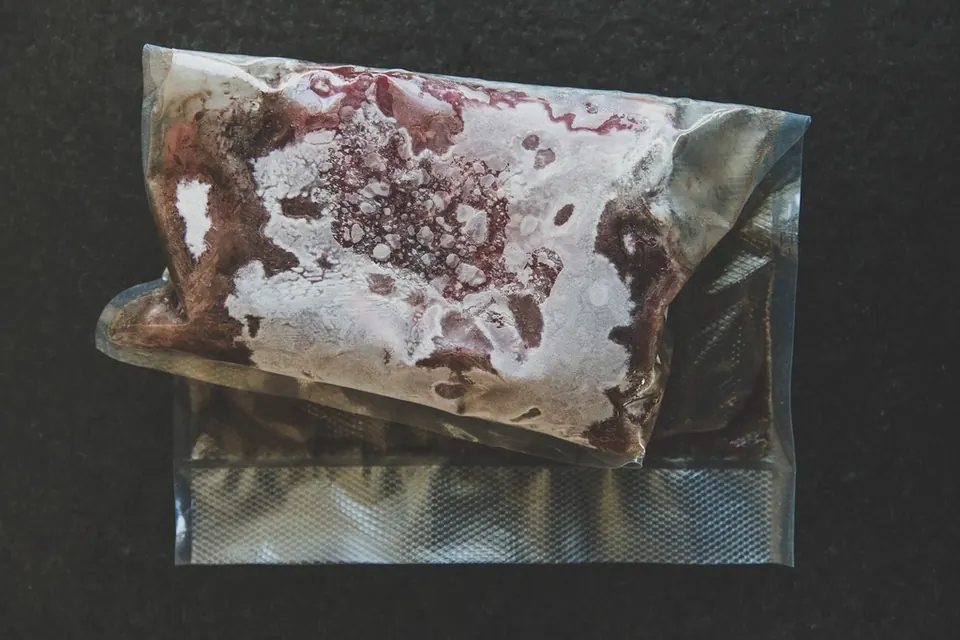
Thawing meat safely
Fridge, cold water or microwave, never the counter: timings, keeping times and the refreezing rules.