How to Thaw Meat, Poultry and Fish Safely: Fridge, Cold Water, Microwave or Straight from Frozen
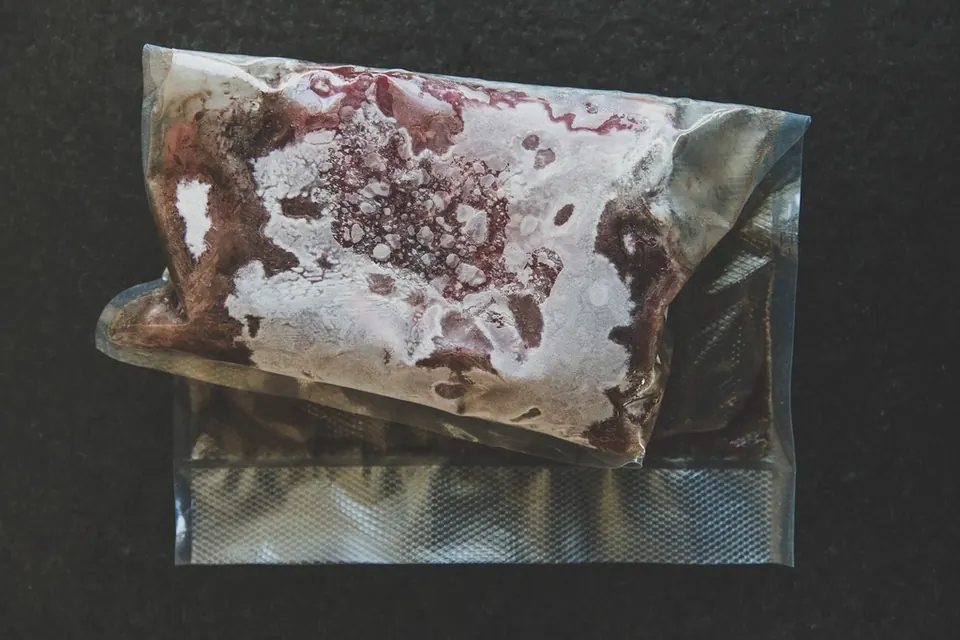
Frozen meat is safe. Freezing does not kill most bacteria, but it stops them growing, and the clock starts again as soon as the food warms up. Thawing is about letting the inside defrost while the outside never sits at a temperature where bacteria multiply. There are three safe ways to do it, plus a fourth option that skips thawing altogether.
Why the counter is the wrong place
Food-safety agencies talk about a "danger zone", the range in which bacteria multiply fastest: 40 to 140 °F (about 4 to 60 °C) in US guidance. A frozen chicken left on the counter does not thaw evenly. The outer layer reaches room temperature and sits in the danger zone for hours while the centre is still a block of ice. Montana State University Extension lists thawing on the countertop and thawing in hot water among the things not to do, along with keeping perishable food out of refrigeration for more than two hours, or one hour above 90 °F (MSU Extension, Safe Thawing Practices).
The same logic explains why some leftovers, rice in particular, are risky if they cool slowly: see our guide to reheating rice safely.
Method 1: in the fridge
This is the method every agency puts first, because the food never leaves a safe temperature. It is also the slowest. The MSU Extension fact sheet advises allowing at least 24 hours for every 5 lb of frozen food, so a whole bird or a large joint can take several days. Small, flat packs thaw much faster than thick ones of the same weight.
- Bottom shelf, in a container. Put the frozen pack on a plate or in a tray big enough to catch the drips, on the lowest shelf, so nothing can drip onto ready-to-eat food. The UK Food Standards Agency gives the same advice for storing raw meat, poultry and fish (FSA, How to chill, freeze and defrost food safely). Our guide to organising a kitchen covers the rest of the fridge order.
- A cold fridge. US advice is 40 °F (4 °C) or below; the FSA asks for 0 to 5 °C. A cheap fridge thermometer tells you whether yours really is that cold.
- Thawed is not the end of the clock. Once fully thawed in the fridge, MSU Extension says ground meat, stew meat, poultry and seafood stay safe for one to two days before cooking, and red-meat cuts such as steaks, chops and roasts for three to five days. The FSA's advice is simpler and stricter: use defrosted food within 24 hours.
Check that the thickest part is fully thawed before you cook. The FSA warns that partly defrosted food may not cook evenly, and bacteria can survive in the part that stays undercooked. This matters most for whole poultry and thick joints.
Method 2: in cold water
Cold water thaws food much faster than air, because water carries heat into the pack far more efficiently. Done properly it is safe, but it needs attention.
- Seal the food in a leak-proof bag. If water gets in, it can carry bacteria onto the food, and the meat soaks up water and turns watery.
- Submerge it completely in cold tap water. A plate on top keeps it down. Do not use warm or hot water to speed things up.
- Change the water every 30 minutes so that it stays cold.
- Cook immediately once it has thawed.
As a rough guide, MSU Extension gives about an hour or less for a 1 lb pack and two to three hours for 3 to 4 lb. Thin, flat packs are faster. This is why freezing mince, chicken thighs and fish fillets flat in freezer bags, rather than in a lump, makes weeknight cooking easier.
Method 3: in the microwave
The defrost setting is the fastest option, but it heats unevenly: thin edges can start to cook, and warm parts may sit in the danger zone while the rest catches up. That is why food thawed in the microwave has to be cooked straight away. A few habits help:
- Take the meat out of foam trays and plastic wrap that are not marked as microwave-safe, and put it in a microwave-safe dish.
- Use the defrost or low-power setting, and turn or separate pieces partway through.
- Defrost only what you are about to cook. The microwave suits smaller portions better than a large joint.
The FSA suggests the microwave's defrost setting, directly before cooking, as the alternative when you cannot thaw in the fridge.
Option 4: cook from frozen
Forgot to take dinner out of the freezer? Many foods can go straight into the pan or oven. MSU Extension says cooking time will be about 50 percent longer than for thawed or fresh food. It works best for thin items: burgers, sausages, chops, fish fillets, and small pieces for stews and soups.
It is less suited to whole poultry and large joints, where the outside can be done long before the centre is safe. Whatever you cook from frozen, check the thickest part with an instant-read thermometer, not the colour of the juices. The same probe thermometer you use on the grill does the job; our article on checking a Bluetooth grill thermometer explains how to test that it reads true.
Can you refreeze thawed food?
| How it was thawed | Refreeze raw? | Refreeze after cooking? |
|---|---|---|
| In the fridge | Yes, while it is still within its keeping time (some quality loss) | Yes |
| In cold water | No: cook it first | Yes |
| In the microwave | No: cook it first | Yes |
| Left on the counter for hours | Do not rely on it. Throw it away if it sat out more than two hours (one hour above 90 °F). | |
MSU Extension describes fridge thawing as the only method that allows raw food to be refrozen. Refreezing is a safety question first and a quality question second: each freeze-thaw cycle draws out more moisture, so a twice-frozen steak will be drier. The FSA adds one rule for cooked dishes: once food has been cooked from frozen and frozen again, reheat it only once.
Keep the kitchen clean while you thaw
Thawing meat drips, and the drip carries whatever bacteria were on the surface. Wash hands, boards, the sink and the plate that held the pack in hot, soapy water once you are done, as the FSA advises. Our guide to cleaning a kitchen properly explains the difference between cleaning and sanitising, and how to deal with boards and cloths.
Thawing checklist
- Plan a day ahead: fridge, bottom shelf, in a dish.
- In a hurry: sealed bag in cold water, changed every 30 minutes.
- Microwave or cold water: cook straight away.
- Thick pieces: check the centre is thawed, or use a thermometer.
- No counter, no hot water, no "it was only out overnight".
Sources
- Montana State University Extension, Safe Thawing Practices, consulted October 2026.
- Food Standards Agency (UK), How to chill, freeze and defrost food safely, consulted October 2026.
- US Department of Agriculture, Food Safety and Inspection Service, The Big Thaw: Safe Defrosting Methods.
 Ingredients & technique
Reheating rice safely
Spores survive cooking and the toxin survives reheating. Cool fast, chill, and reheat once until steaming.
 The kitchen
Organising a kitchen
Work zones, a fridge set to 4 °C, pantry rotation and the date-label rules, step by step.
 The kitchen
Cleaning a kitchen properly
Clean first, then sanitise: boards, sponges, a weekly routine, and the products you must never mix.