Marinades and Brines: What Acid, Salt, Oil and Enzymes Really Do, How Long to Leave Them, and the Food-Safety Rules
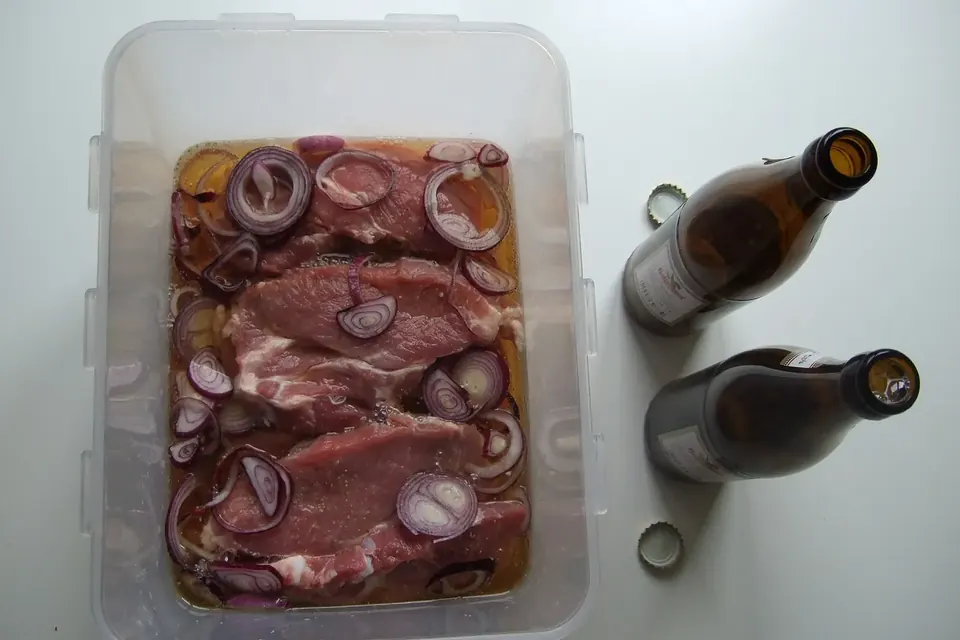
Recipes ask for marinades with great confidence: soak this overnight, that for two days, and the meat will come out tender and full of flavour. Some of that is true, and some is wishful thinking. Once you know what each ingredient in a marinade or a brine actually does, you can judge a recipe's timings for yourself, avoid the mushy chicken breast and the over-salted roast, and handle the leftover liquid safely.
What a marinade is made of
Most marinades combine four kinds of ingredient:
- Salt, on its own or through soy sauce, fish sauce, miso or a salty condiment. It seasons the meat and changes how it holds water.
- Acid: vinegar, citrus juice, wine, beer, yoghurt or buttermilk. It brightens flavour and alters the proteins at the surface.
- Oil, which carries the fat-soluble aromas of garlic, herbs and spices, helps the marinade cling, and encourages even browning.
- Aromatics and sugar: garlic, onion, ginger, herbs, spices, honey or sugar, for flavour and colour.
Some recipes add a fifth: fruit or roots that contain protein-digesting enzymes, such as fresh pineapple, papaya, kiwi fruit or ginger. These are the most powerful tenderisers in the kitchen and the easiest to overdo.
Why most of the flavour stays on the surface
Meat is mostly water held in a dense network of muscle fibres. Small, dissolved salt ions move into it steadily, which is why a salted or brined piece of meat is seasoned well below the surface after a few hours. Most flavour molecules from herbs, spices and garlic are larger, many dissolve in oil rather than water, and they travel very slowly. In practice they flavour the outside and the crust, and an overnight soak adds less depth than the recipe suggests.
That has two useful consequences. Thin pieces, kebab cubes and butterflied cuts gain far more from a marinade than a thick roast, because they have more surface for their weight. And a glaze, a sauce or a spice rub applied at the end often does as much for flavour as a long soak.
Acids and enzymes: tender or mushy
Acids loosen and denature proteins at the surface of the meat. Over a short time this can make the outer layer feel more tender and help it take on flavour. Left too long, the same reaction makes the surface pale, chalky, grainy or mushy, while the centre is unchanged. Fish and shellfish show it fastest: in citrus juice their surface turns opaque, as in ceviche, which is a change in texture and not a substitute for cooking when safety matters.
Enzymes from pineapple, papaya, kiwi and ginger go further, breaking proteins down rather than just loosening them. A short spell can soften a tough cut; a long one can turn chicken or pork into paste. Cooking the fruit, or using canned pineapple, inactivates most of the enzyme, which is why recipes that want the flavour without the effect often call for them.
How long to marinate
Illinois Extension sums up the range: some marinades stay on the meat for only 15 to 30 minutes before cooking, which suits already-tender meat and seafood that may turn tough or mushy with longer marinating; other recipes marinate for a few hours up to 24 hours, which gives stronger flavour and helps tenderise tough cuts. As a practical guide:
| Food | Typical approach | Watch out for |
|---|---|---|
| Fish fillets, prawns, scallops | A short marinade, minutes rather than hours | Acid and enzymes soften the flesh quickly |
| Chicken pieces and breasts | A few hours; yoghurt-based marinades are gentle | Strong citrus or pineapple turns the surface mushy |
| Pork chops, kebab cubes, thin steaks | A few hours, up to overnight | Sugary marinades burn over direct heat |
| Tough cuts for the grill (skirt, flank, shoulder steaks) | Several hours up to about a day | Slice across the grain after cooking: it matters more than the soak |
Long, salty marinades that behave like brines are fine; long, acidic or enzyme-rich ones usually are not.
Brining: salt does the work
A brine is salt water, sometimes with sugar and aromatics. Salt dissolves part of the muscle proteins, and the meat then holds on to more of its moisture while it cooks. That is why brined turkey, chicken and pork chops tend to stay juicier, and why brining is most useful for lean meat that is easy to overcook.
- Wet brine. The meat is submerged in salted water in the refrigerator. It needs a big container and fridge space, and it dilutes the flavour of the skin slightly, which makes crisp poultry skin harder to achieve.
- Dry brine. Salt is rubbed on the meat, which is then left uncovered or loosely covered on a rack in the refrigerator. The salt draws out moisture, dissolves in it, and is drawn back in. It takes up less space, concentrates flavour and leaves a drier surface that browns and crisps well.
Three cautions apply. Salt crystal sizes vary so much between brands and types that a spoonful of flaky salt can contain far less salt than a spoonful of fine table salt, so follow a recipe that gives weights, or the salt it was written for. Check the label before brining: some poultry and pork is sold already injected with a salty solution, and brining it again gives an over-salted result. And brined meat produces salty drippings, so taste before seasoning a gravy or pan sauce.
The food-safety rules
A marinade is not a preservative. Illinois Extension is explicit that, although marinades are acidic, you should not rely on them to kill bacteria; safety comes from cold storage, clean handling and proper cooking. The practical rules:
- Marinate in the refrigerator, never at room temperature. Start with meat that has been thawed safely; our guide to thawing meat, poultry and fish covers the options.
- Use food-safe containers: resealable food-safe plastic or silicone bags, or glass or stainless steel. Put bags in a dish on the lowest shelf so that a leak cannot drip on other food.
- Set aside sauce before the meat goes in. If you want to serve some of the marinade, put a portion in a separate covered container in the fridge first.
- Boil used marinade if you want to serve it after it has touched raw meat. Bringing it to the boil kills harmful bacteria; brushing raw-meat marinade on food at the very end of cooking skips that step.
- Do not reuse plastic bags that held raw meat and marinade. Wash glass and metal containers with soap and water; Illinois Extension suggests sanitising them by soaking for 30 seconds in 1 teaspoon of unscented household bleach per 4 cups of water, then air drying. Reusable silicone bags are best kept for raw meat only, ideally one bag per type of meat.
- Cook to a safe internal temperature. A marinade changes the colour of meat, especially soy or wine marinades, so colour is an even poorer guide than usual. Use a thermometer, as explained in our safe internal temperature chart.
Clean the worktop, the sink and anything raw marinade has splashed on, in the same way as after handling any raw meat; our guide to cleaning a kitchen properly explains the difference between cleaning and sanitising.
Getting it onto the grill
Lift the meat out of the marinade, let the excess drip off and pat the surface dry with paper towel. A wet surface steams before it browns, and a puddle of oil causes flare-ups. Marinades with honey, sugar or sweet sauces scorch quickly over direct flames, so sear briefly and finish on the cooler side of a two-zone fire, or brush the glaze on during the last minutes. Throw away the used marinade unless you have boiled it, wash the tongs that handled the raw meat, and use a clean plate for the cooked food.
Marinade checklist
- Thin cuts and cubes benefit most; thick roasts mainly gain flavour on the outside.
- Short times for fish and seafood, and for anything with citrus, pineapple, papaya or kiwi.
- Fridge only, in a food-safe container on the bottom shelf.
- Sauce portion set aside before the raw meat goes in, or the used marinade boiled.
- Pat dry before cooking, check the centre with a thermometer.
Sources
- University of Illinois Extension, Meat Safety: Marinating (marinating times, refrigeration, boiling used marinade, containers, cleaning and sanitising), consulted November 2026.
 Grill & smoke
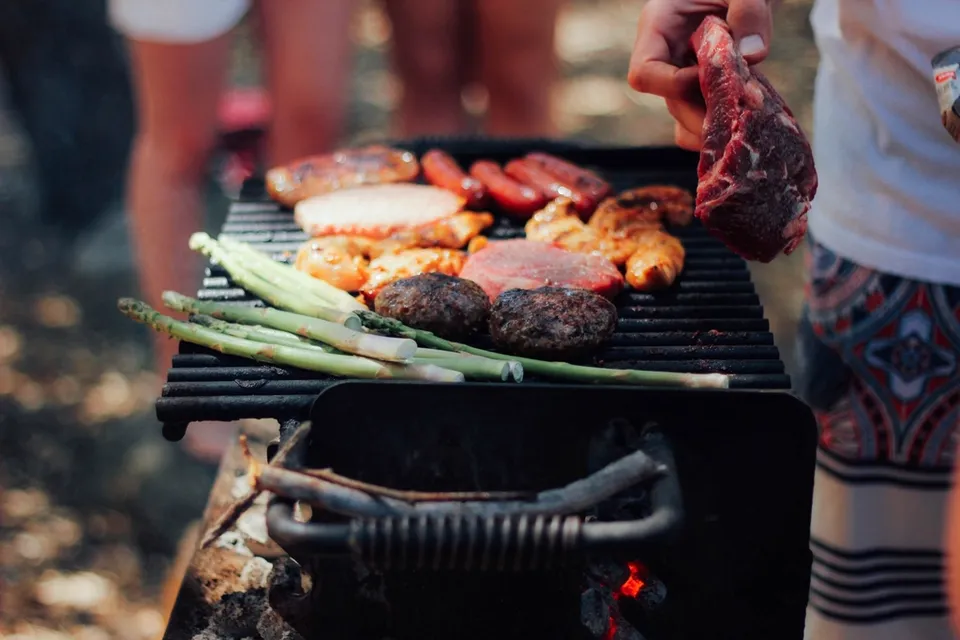
Two-zone grilling
One hot side, one cool side: how to set it up on charcoal or gas, and what to cook where.
 Ingredients & technique
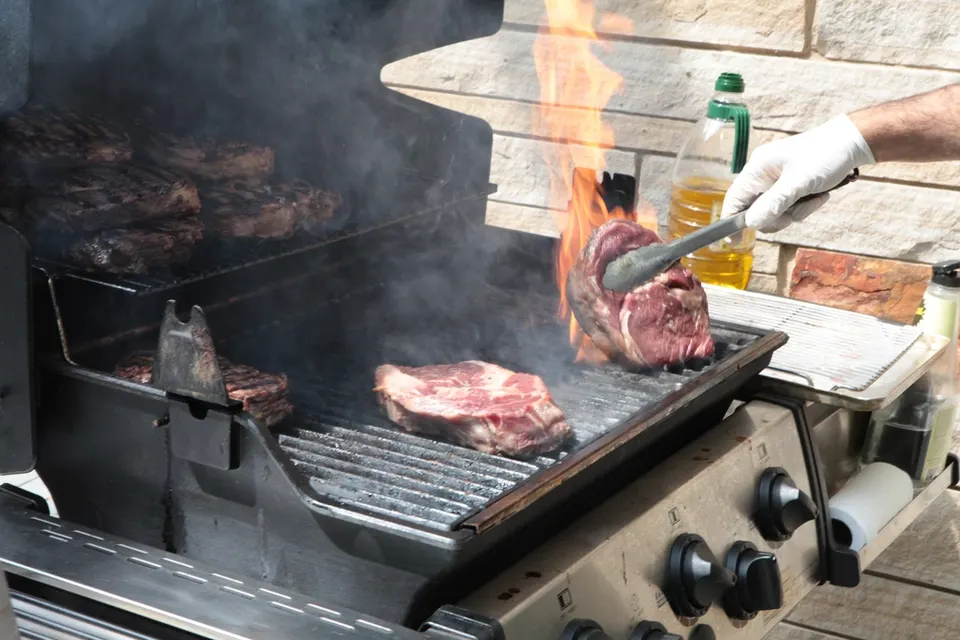
Safe internal temperatures
145, 160 or 165 °F? The temperature chart for meat, poultry and fish, why the UK does it differently, and where the probe should go.
 Ingredients & technique
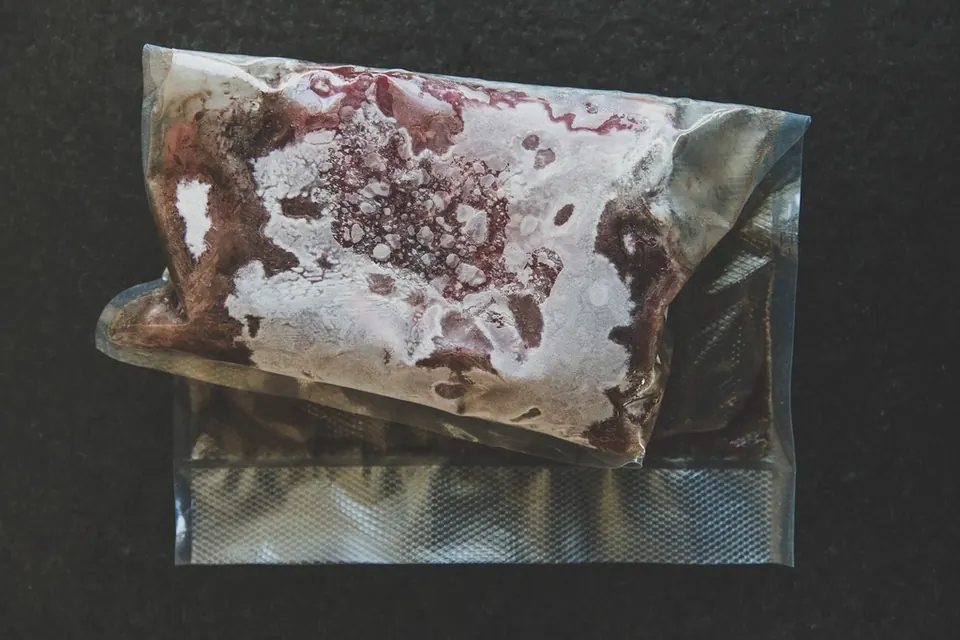
Thawing meat safely
Fridge, cold water or microwave, never the counter: timings, keeping times and the refreezing rules.