Viewing a Rental: The Kitchen Checklist
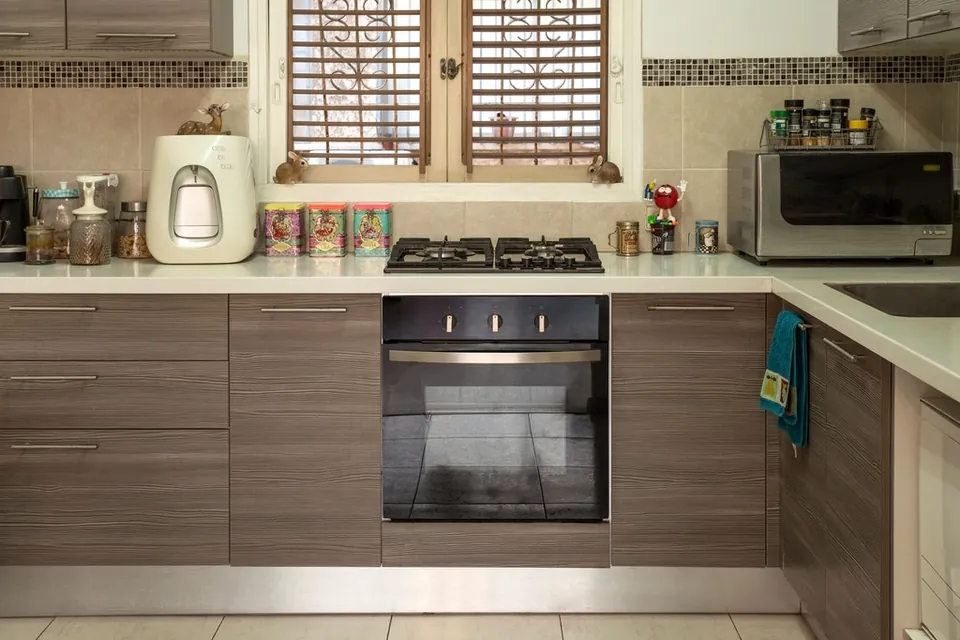
A rental viewing usually lasts twenty minutes, and the kitchen gets two of them: a glance at the worktops, a nod at the oven. Yet the kitchen is where problems cost tenants the most day to day, from an extractor that does nothing to a fridge that cannot hold 4 °C or damp hiding behind the washing machine. This checklist takes about fifteen minutes and tells you what to look at, what to switch on, and which safety documents to ask for.
Before you book viewings, it helps to compare neighbourhoods and listings side by side, so your fifteen minutes with this checklist go to homes that already fit your budget and your commute.
Bring a small kit
- A tape measure, for appliance gaps, worktop depth and the space for a table.
- Your phone, for photos, the torch and a timer.
- A cheap plug-in socket tester, if you have one: it shows wiring faults in a socket in seconds.
- A note of the questions below, so nothing gets forgotten while the agent talks.
Appliances: switch them on
| Appliance | What to check | Warning signs |
|---|---|---|
| Hob | Light every ring or zone; on gas, flames should be steady and mostly blue | Yellow, lazy or lifting flames; ignition that clicks without lighting; cracked glass top |
| Oven and grill | Switch on for a minute; check the door seal and the light | Torn seal, door that does not close flat, burning smell |
| Freestanding cooker | Push gently on the back of the open door area | The cooker tips: it lacks an anti-tip bracket |
| Fridge and freezer | Feel the cold; check door seals and the inside for mould | Ice build-up, torn gaskets, water pooling, a loud compressor |
| Dishwasher, washing machine | Ask whether they are included and maintained by the landlord | Stains or swelling on the floor or plinth in front |
Ask which appliances belong to the landlord and who repairs them. In many tenancies the landlord repairs appliances supplied with the home; a previous tenant's leftover fridge may be no one's responsibility. Freestanding cookers can tip forward if a child climbs on the open door; the US Consumer Product Safety Commission has long warned about range tip-overs and the anti-tip brackets that prevent them.
Ventilation and extraction
Cooking releases moisture, grease and, with gas hobs, combustion products such as nitrogen dioxide. Turn the cooker hood on at full speed and hold a sheet of kitchen paper under it: it should be drawn up firmly. Ask whether it vents outside or recirculates through a filter, and when the filters were last changed. A window that opens properly matters too. Our guide to ranges and hoods explains what makes extraction effective.
Seals, damp and leaks
- Under the sink. Open the cupboard and use your torch. Look for drips at the trap and supply pipes, water stains, swollen chipboard and a musty smell.
- Sealant. Check the silicone where worktop meets wall and around the sink. Black, peeling or missing sealant lets water into the units.
- Walls and ceiling. Black spotting in corners, behind appliances and around the window frame suggests condensation or a leak. The US Environmental Protection Agency notes that the key to mould control is moisture control: ask what has been done about the cause, not only the stain.
- Floor. Soft spots or lifting tiles in front of the sink or dishwasher point to a past leak.
- Pests. Droppings at the back of cupboards or behind the plinths, and gaps around pipes, are worth a direct question.
Worktops, storage and layout
Measure the clear worktop length between hob and sink: it is your prep space. Open every cupboard and drawer, checking that doors close, hinges hold and drawers run smoothly. Count how many cupboards would hold food rather than pans. Measure the gap for any appliance you own, including height under the worktop and the width of the doorway into the kitchen. If there is no space for a dishwasher, a countertop model needs a free tap and counter space beside the sink.
Gas and electrical safety
Rules depend on where you live, so ask the agent or landlord what applies, and ask to see the documents rather than taking a verbal "yes".
- Gas safety record. In Great Britain, landlords must have gas appliances, fittings and flues checked every year by a registered engineer and give tenants a copy of the record, under rules explained by the Health and Safety Executive. Ask for the latest one.
- Electrical inspection. In England, private landlords must have the electrical installation inspected and tested at least every five years and give tenants the report, as set out in government guidance.
- Sockets. Look for scorch marks, loose faceplates and sockets placed right beside the sink. In US kitchens, building codes generally require ground-fault (GFCI) protection for countertop outlets; a test and reset button on the outlet is a good sign.
- Smell. Any smell of gas during the viewing should stop the visit: leave, and tell the agent to call the emergency gas line.
Alarms and fire safety
Check that a smoke alarm is fitted near, but not inside, the kitchen and press its test button if allowed. If there is a gas boiler or another fuel-burning appliance, look for a carbon monoxide alarm. In England, landlords must fit smoke alarms on every storey and carbon monoxide alarms in rooms with fixed combustion appliances, gas cookers excepted. In the US, requirements are set by states and cities; the National Fire Protection Association recommends smoke alarms on every level of a home. A fire blanket near the exit of the kitchen is a sensible extra to ask about.
Water check
- Run the cold tap for a minute. It should run clear, with steady pressure.
- Run the hot tap and time how long it takes to get hot.
- Very hot water scalds. The CPSC recommends setting water heaters to about 49 °C (120 °F); ask who controls the setting.
- Look at the tap base and the kettle, if one is left: thick white scale means hard water, which matters for coffee machines and dishwashers.
Questions to ask before signing
- Which appliances are included, how old are they, and who repairs them?
- When were the gas safety check and the electrical inspection last done, and can I have copies?
- Has there been any leak, damp or pest treatment in the kitchen?
- Will the oven, extractor filters and fridge be cleaned before move-in?
- Can promised repairs be written into the tenancy, with a date?
On moving day
Photograph the kitchen in detail before unpacking, including inside the oven and fridge, and send the photos to the landlord or agent with the inventory. Put a thermometer in the fridge overnight to check it holds 4 °C or below, as recommended by the US Food and Drug Administration. Then follow our guides to organising and cleaning your new kitchen.
Sources
- Health and Safety Executive, Gas safety: landlords and letting agents.
- UK Government, Electrical safety standards in the private rented sector.
- US Environmental Protection Agency, Mold.
- National Fire Protection Association, Smoke alarms.
- US Consumer Product Safety Commission, range tip-over and water heater scald guidance.
- US Food and Drug Administration, Are you storing food safely?
 The kitchen
Organising a kitchen
Work zones, a fridge set to 4 °C, pantry rotation and the date-label rules, step by step.
 The kitchen
Cleaning a kitchen properly
Clean first, then sanitise: boards, sponges, a weekly routine, and the products you must never mix.
 Tools & appliances
Pro-style ranges and hoods
Burners, simmer and ovens, then the hood: width, height, CFM, ducting and the make-up air rule.