Air Fryers Explained: How They Work, What to Compare, and How to Test One at Home
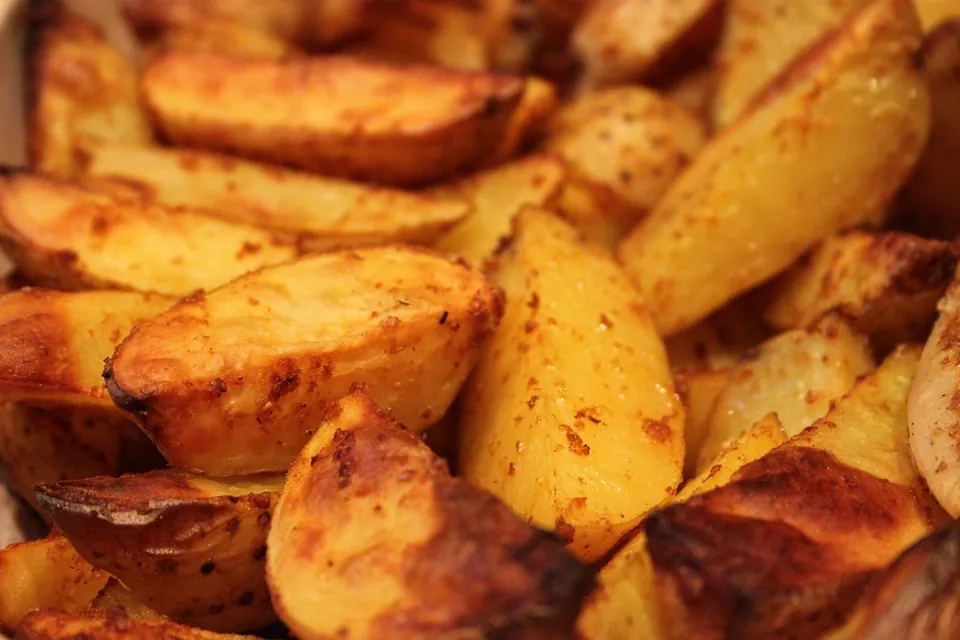
Philips introduced its Airfryer around 2010, and the idea it popularised, a small countertop appliance that crisps food with hot air instead of a vat of oil, has since become one of the best-selling kitchen appliances in many countries. Today dozens of brands sell basket, dual-drawer and oven-style air fryers. Underneath the marketing they all work the same way, which makes it possible to compare them on a few practical criteria and to check one yourself.
This is a guide, not a product review: Hob & Ember has no affiliation with Philips or any other brand and has not run laboratory tests. "Airfryer" is a Philips trademark.
How an air fryer works
An electric element sits above the cooking chamber, and a fan pushes air over it and down around the food. The fast-moving hot air removes surface moisture quickly, which allows browning (Maillard reactions) and crisping at temperatures typically up to about 200 °C. A light coat of oil helps heat transfer and gives a fried-like surface, but much less oil is needed than for deep frying. A conventional fan oven does the same thing on a larger, slower scale; the air fryer's small chamber and strong airflow make it faster for small batches.
Designs compared
| Design | Strengths | Limits |
|---|---|---|
| Single basket (drawer) | Fast, crisp, compact, easy to shake food | Limited capacity; one food at a time |
| Dual drawer | Two foods at different settings, finishing together | Each drawer is small; wide footprint |
| Oven-style (door and racks) | Larger capacity, multiple levels, window, can roast and bake | Slower to crisp; racks need swapping for even results |
| Combination microwave or multi-cooker with air-fry mode | One appliance for several jobs | Air-fry results often less crisp than a dedicated unit |
What to compare
- Usable capacity. Manufacturers state capacity in litres or quarts, but what matters is the floor area of the basket for a single layer. Measure it, or check how many chicken thighs fit in one layer.
- Power. Common models draw roughly 1,400 to 2,000 watts. Higher power can help recovery after the drawer is opened, but airflow design matters as much. Check that your circuit can take it alongside a kettle.
- Temperature range and controls. A range from about 80 to 200 °C covers most uses; lower settings allow dehydrating or proving. Simple dials are durable; touch screens are easier to clean.
- Basket coating. Most baskets are nonstick-coated. Avoid metal tongs and abrasive pads, and replace a basket if the coating flakes. Some models offer stainless steel or ceramic-coated baskets.
- Noise. The fan is audible. Manufacturers rarely publish noise levels, so listen in a shop or check returns policies.
- Cleaning. Removable, dishwasher-safe baskets and trays help, though hand washing preserves coatings longer.
Test an air fryer at home
- Temperature check. Place an oven thermometer in the empty basket, set 180 °C and read it after ten minutes. Many units run several degrees off; knowing yours lets you adjust recipes.
- Fries test. Cook a weighed portion of frozen fries in a single layer, shaking halfway, at the packet's air-fryer instructions. Then cook a double portion. Note how much longer it takes and how evenly the second batch browns: this shows the real working capacity.
- Wings test. Cook chicken wings and check the thickest one with a probe thermometer. It must reach 74 °C (165 °F). Compare skin crispness on top and underneath.
- Cool-down. After cooking, feel the outside of the housing and the area behind the air outlet. Note how far from the wall the unit needs to stand.
Acrylamide and browning
Acrylamide is a chemical that forms in starchy foods such as potatoes and bread when they are cooked at high temperatures, whether by frying, roasting, baking or air frying. The US Food and Drug Administration provides advice on reducing acrylamide, and the UK Food Standards Agency's advice is to "go for gold": cook starchy foods to a golden yellow colour rather than dark brown. Soaking cut raw potatoes in water for 15 to 30 minutes before cooking, then drying them well, also reduces acrylamide formation.
Is it healthier?
Air-fried food typically uses far less oil than deep-fried food, so it contains less fat and fewer calories from oil. That does not make every air-fried food healthy: coated frozen snacks remain processed foods. The benefit is the method, not the machine.
Safety
- Leave space around the unit as the manual specifies, usually at least 10 to 15 cm, and never place it under wall cupboards that the hot exhaust can damage.
- Do not put loose parchment or foil in an empty basket: the fan can lift it into the heating element. Only use liners designed for air fryers, weighed down by food.
- Do not cover the air inlet or outlet, and keep the appliance on a stable, heat-resistant surface.
- Clean out grease and crumbs regularly; built-up fat can smoke or catch fire.
- Check for recalls on your model at the US Consumer Product Safety Commission or your national product-safety authority.
Cooking tips
- Preheat for a few minutes if the manual recommends it; it improves crisping.
- Pat food dry and use a little oil, tossed or sprayed with an oil mister rather than aerosol sprays that can damage coatings.
- Shake or turn food halfway through.
- Reduce oven-recipe temperatures by about 10 to 20 °C and check earlier: air fryers cook faster.
Bottom line
Buy for usable basket area and design that fits your household, not for headline wattage or a long list of presets. Then learn your unit with a thermometer and a couple of simple tests.
Sources
- US Food and Drug Administration, Acrylamide questions and answers.
- UK Food Standards Agency, Acrylamide.
- USDA Food Safety and Inspection Service, Safe minimum internal temperature chart.
- US Consumer Product Safety Commission, Recalls.
 Tools & appliances
Keurig vs Nespresso
Drip-style pods versus pressure and spin: brewing method, cup style, pods, recycling and descaling.
 Tools & appliances
Countertop dishwashers
Fit, faucet and tank options, ENERGY STAR and NSF/ANSI 184, and a home test with your own plates.
 The kitchen
Cleaning a kitchen properly
Clean first, then sanitise: boards, sponges, a weekly routine, and the products you must never mix.