Keurig vs Nespresso: How Each Pod System Brews, What It Costs the Planet, and How to Judge Your Cup
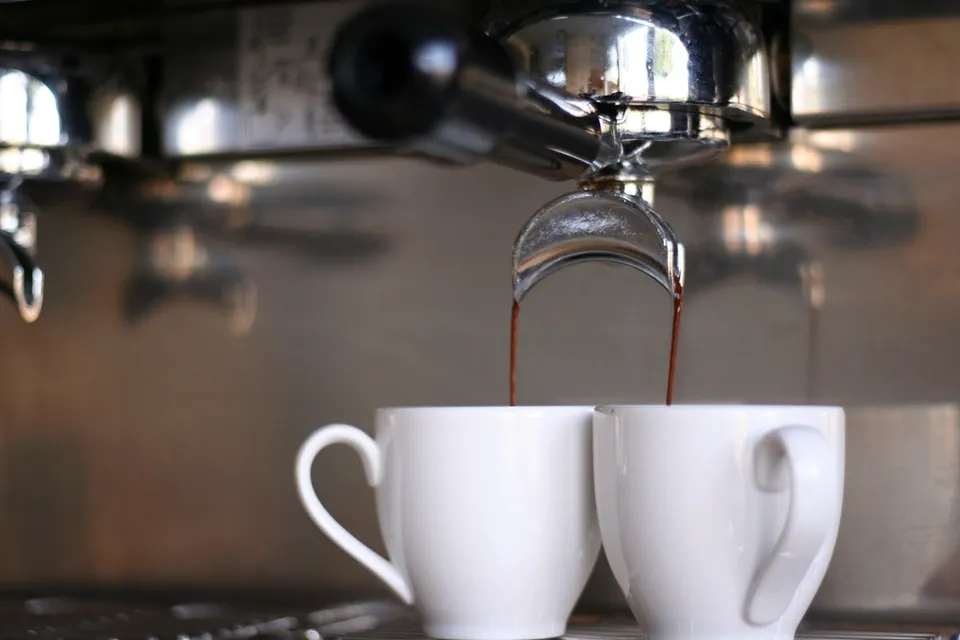
Keurig and Nespresso both sell convenience: a pod, a button, a cup in about a minute. But they make very different coffee. Keurig's K-Cup brewers make drip-style coffee in mug sizes; Nespresso's Original machines make espresso under pump pressure, and its Vertuo machines use spinning capsules to make everything from espresso to a large mug. Pick the system that matches the coffee you actually drink.
Hob & Ember has no affiliation with Keurig, Nespresso or any retailer, and does not sell coffee or machines. Descriptions below come from the manufacturers' published information.
How each system brews
| Keurig K-Cup | Nespresso Original | Nespresso Vertuo | |
|---|---|---|---|
| Method | Needles pierce the pod; hot water flows through at low pressure | Capsule pierced; pump forces water through at high pressure | Capsule spun at high speed while water is injected |
| Cup style | Drip-style coffee | Espresso, ristretto, lungo | Espresso to large mug, with thick foam |
| Cup sizes | Selectable, roughly 4 to 12 oz on many models | Short, mostly 25 to 110 ml | Set by the capsule's barcode |
| Pod material | Plastic cup with filter and foil lid | Aluminium (Nespresso); others in plastic, aluminium or compostable | Aluminium |
| Third-party pods | Very wide choice; reusable filters available | Wide choice of compatible capsules | Limited |
Neither Keurig nor Vertuo coffee is espresso in the traditional sense, which is defined by pressure brewing a fine, compact dose. Vertuo's foam comes largely from the spinning process. If you drink milky espresso drinks, an Original machine with a milk frother, or a model with an integrated milk system, is the closest match. If you want a large mug of filter-style coffee, a Keurig or a Vertuo is a better fit.
Pods, choice and waste
Keurig's K-Cups are made with polypropylene (plastic type 5), and the company describes them as recyclable once you peel off the lid and empty the grounds, where local recycling accepts that material. Reusable mesh filters let you use your own coffee in most Keurig brewers. Nespresso capsules are aluminium, which is recyclable, but small capsules are often too small for sorting machines; Nespresso runs a return programme in many countries. Many compatible capsules for the Original system are available in other materials.
Whatever the system, the honest summary is that pods create more packaging per cup than brewing from a bag of beans or ground coffee, and recycling depends on what you do with the used pod.
Milk
- Some Nespresso models integrate a milk carafe or frothing system; others pair with a separate frother such as the Aeroccino.
- Some Keurig models include a frother or a "latte" function using a pod and milk.
- A standalone frother or a small manual frothing jug works with any machine. Whichever you use, clean milk parts after every use: milk residue is a breeding ground for bacteria.
Judge your cup at home
- Volume consistency. Put a cup on a kitchen scale, zero it, brew and note the weight. Repeat five times with the same pod type. A healthy machine delivers within a few grams each time; a drop usually means scale build-up.
- Temperature. Measure the coffee immediately with a probe thermometer. Brew water is ideally around 90 to 96 °C (195 to 205 °F); coffee in the cup will read lower. A big drop over time suggests the heater needs descaling.
- Warm-up time. Time from switch-on to ready. Machines vary from seconds to a couple of minutes.
- Taste comparison. Brew the same coffee by another method (French press, pour-over) at a similar strength and taste side by side. It helps you decide whether a pod machine's convenience is worth the difference for you.
Descaling and cleaning
Hard water leaves limescale in the heater and pipes, which slows flow, lowers temperature and can stop a machine. Both companies recommend descaling regularly; many machines show an alert. Use the maker's descaler or a suitable citric-acid descaler following the manual, and never vinegar if the manual forbids it. Also:
- Empty the used-pod container and drip tray daily so they do not grow mould.
- Change the water in the tank daily and rinse it weekly.
- Run a water-only cycle if the machine has not been used for a few days.
- Check the needles on Keurig machines; coffee grounds can block them, and the manual explains how to clear them.
Other single-serve brewers
Many brands make single-serve brewers that accept K-Cup-type pods, ground coffee in a reusable basket, or both. They brew in the same low-pressure way as Keurig machines. If you mostly use your own coffee, a model with a permanent filter basket or a simple drip machine may give better value than a pod system.
Caffeine and health
Caffeine per cup varies widely with the coffee, the pod and the cup size. The US Food and Drug Administration cites 400 mg a day as an amount not generally associated with negative effects for healthy adults, with lower limits for pregnancy and for people sensitive to caffeine. See the FDA's consumer guidance.
Bottom line
For mug-sized filter-style coffee and the widest pod choice, the Keurig approach fits. For espresso and milk drinks, a Nespresso Original machine fits. For both large mugs and espresso from one machine, with a narrower capsule choice, Vertuo is the middle path. Whichever you choose, descale it and clean the milk parts, and it will keep making the same cup for years.
Sources
- Keurig, brewer manuals and recycling information.
- Nespresso, machine information and capsule recycling.
- US Food and Drug Administration, Spilling the beans: how much caffeine is too much?
 Tools & appliances
Air fryers explained
A compact convection oven in a drum: capacity, power, coatings, and a home test with fries and wings.
 The kitchen
Cleaning a kitchen properly
Clean first, then sanitise: boards, sponges, a weekly routine, and the products you must never mix.
 The kitchen
Organising a kitchen
Work zones, a fridge set to 4 °C, pantry rotation and the date-label rules, step by step.