Crepe Pans: Carbon Steel, Cast Iron or Nonstick, and How to Check One at Home
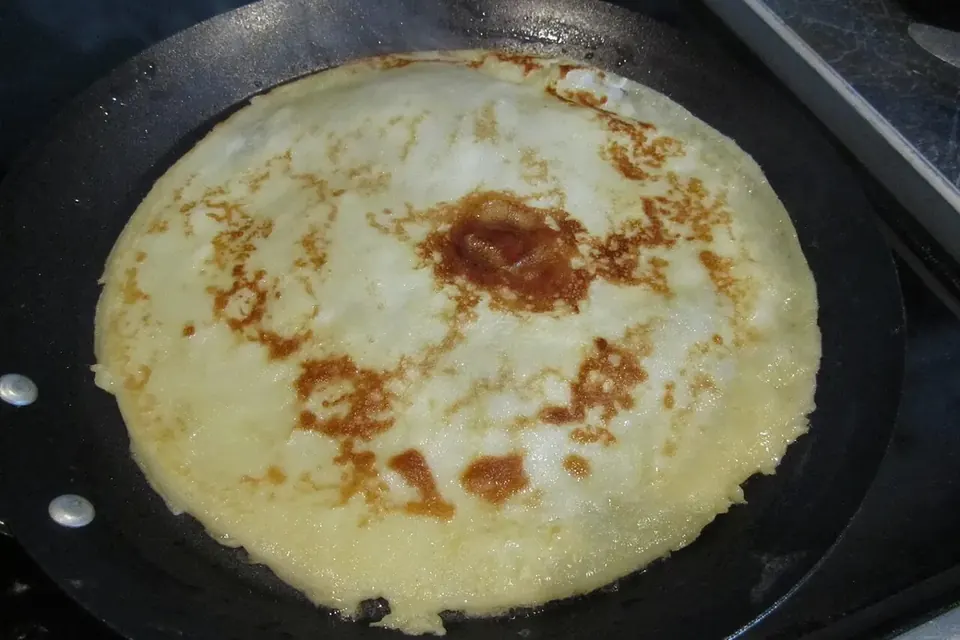
A crepe is just batter, heat and a flick of the wrist, but the pan decides whether the first one tears and the tenth one sticks. The ideal crepe pan is wide, shallow, flat and evenly heated. Beyond that, the choice between carbon steel, cast iron and nonstick is a trade between upkeep, weight and how long the surface lasts.
What makes a pan a crepe pan
A dedicated crepe pan has very low, flared sides, sometimes barely a centimetre high, so you can slide a spatula under the edge and flip without obstruction. The base must sit flat on the burner: a crepe is so thin that any dome or warp shows up as a pale ring and a scorched patch. Diameter is usually given for the top rim, so check the flat cooking surface, which may be 2 to 4 cm smaller.
Materials compared
| Material | Strengths | Weaknesses | Induction |
|---|---|---|---|
| Carbon steel | Light, heats fast, builds a durable seasoning, lasts decades | Must be seasoned and dried; rusts if neglected; can react with acidic fillings | Yes |
| Cast iron | Excellent heat retention and evenness once hot | Heavy to swirl and flip, slow to heat and to adjust | Yes |
| Nonstick aluminium (PTFE or ceramic coating) | Releases easily from the first use, light, cheap | Coating wears; must not be overheated empty; avoid metal tools | Only with a steel base plate |
| Electric crepe maker (griddle) | Large, even surface; thermostat | Needs space and a spreader; one more appliance | n/a |
Carbon steel and cast iron work on induction because they are magnetic. For aluminium pans, look for a stated induction base, or simply test with a fridge magnet: if it sticks firmly to the underside, the pan will work on induction.
Nonstick coatings and heat
Most nonstick pans use a polytetrafluoroethylene (PTFE) coating. It is inert at normal cooking temperatures, but it starts to break down if a pan is heated empty to very high temperatures, commonly cited as above about 260 °C (500 °F), releasing fumes that can cause flu-like symptoms in people and are dangerous to pet birds. Crepes need only medium heat, so this is easy to avoid: never preheat a nonstick pan empty on full power, and ventilate the kitchen. Ceramic (sol-gel) coatings tolerate higher heat but tend to lose their release properties sooner. Replace any pan whose coating is flaking.
Seasoning a carbon steel pan
New carbon steel pans usually come with a protective wax or oil coating that must be removed, following the maker's instructions (often hot water and scrubbing, sometimes heating). Seasoning is a thin layer of oil that has been heated past its smoke point until it polymerises into a hard, slick film.
- Wash, dry and warm the pan on the hob until all moisture has gone.
- Wipe on a very thin layer of a neutral, high-smoke-point oil, then wipe almost all of it off again with paper towel.
- Heat until it smokes and the surface darkens, let it cool slightly, and repeat two or three times.
- Cook a few fatty things (potatoes, bacon) before your first crepes. The pan will darken unevenly at first; that is normal.
Afterwards, wipe the pan clean or rinse with hot water, dry it on the heat and leave a trace of oil. Avoid soaking and the dishwasher.
Test it at home
- Flatness. Lay a steel ruler across the base inside and out. Light visible under the ruler on the outside means the pan will rock or touch the burner unevenly.
- Water bead. On a level hob, put a tablespoon of water in the centre of the cold pan. If it runs straight to one side, the base is not flat.
- Flour test for even heat. Sprinkle a thin, even layer of plain flour over the dry pan and heat on medium. The pattern in which the flour browns shows the hot spots. Ideally it browns evenly across the cooking surface; a dark ring or a dark centre tells you where crepes will scorch. Repeat on each burner you plan to use.
- Handle. Hold the pan at arm's length and do the swirling motion. If your wrist tires within a few swirls, a lighter pan will make better crepes.
A reliable basic batter
This is a standard French-style ratio that suits a 22 to 24 cm pan and makes about 12 crepes.
- 250 g plain flour, a pinch of salt
- 3 large eggs
- 500 to 600 ml milk
- 30 to 50 g melted butter
Whisk the flour and salt with the eggs, then add the milk gradually to avoid lumps, and finally the butter. Rest the batter for 30 minutes to an hour so the flour hydrates and bubbles subside. Heat the pan over medium heat, wipe it with buttered paper, pour a small ladle of batter and swirl immediately so it covers the base thinly. Flip when the edges lift and the underside is golden, usually under a minute. The first crepe is traditionally a test: it tells you whether to adjust heat or thin the batter with a splash of milk.
For Breton-style galettes, buckwheat flour, water and salt replace most of the wheat flour and milk, and the batter is cooked on a larger, hotter surface. Eggs in batter should be cooked through; the US food-safety guidance is to cook egg dishes until set.
Care and lifespan
- Carbon steel and cast iron: dry on heat, oil lightly, store dry. Rust spots can be scrubbed off and the area re-seasoned.
- Nonstick: wash by hand with a soft sponge even if labelled dishwasher-safe; use wooden or silicone tools; stop using it when the coating is visibly worn or flaking.
- All pans: do not plunge a hot pan into cold water; thermal shock can warp thin bases.
Sources
- USDA Food Safety and Inspection Service, Safe minimum internal temperature chart (egg dishes).
- US Food and Drug Administration, Authorized uses of PFAS in food contact applications (including PTFE nonstick coatings).
 Pans & bakeware
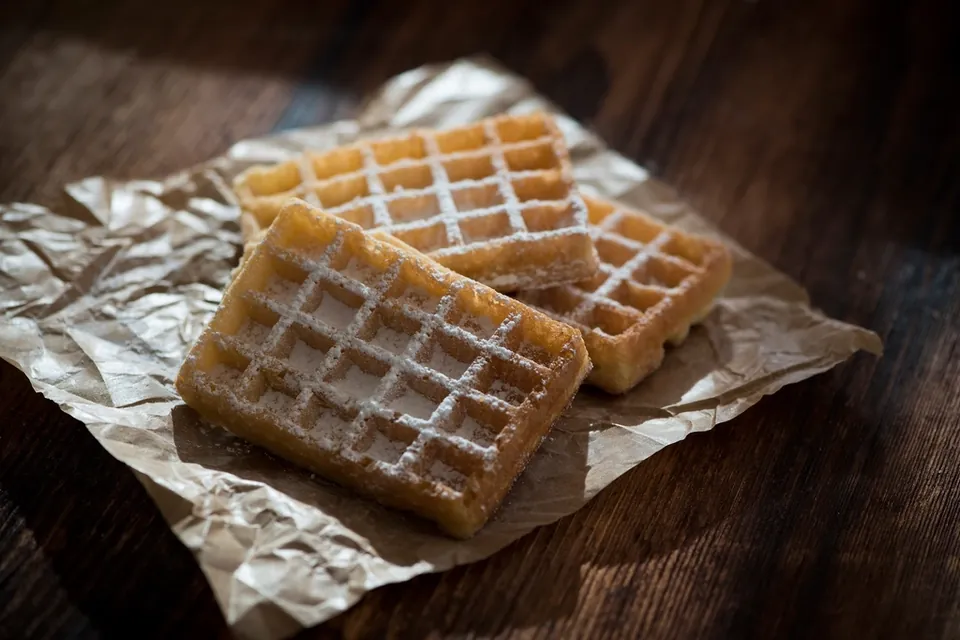
Bubble waffle makers
Stovetop or electric, plate depth and coatings, and a batter that turns out crisp, hollow bubbles.
 Pans & bakeware
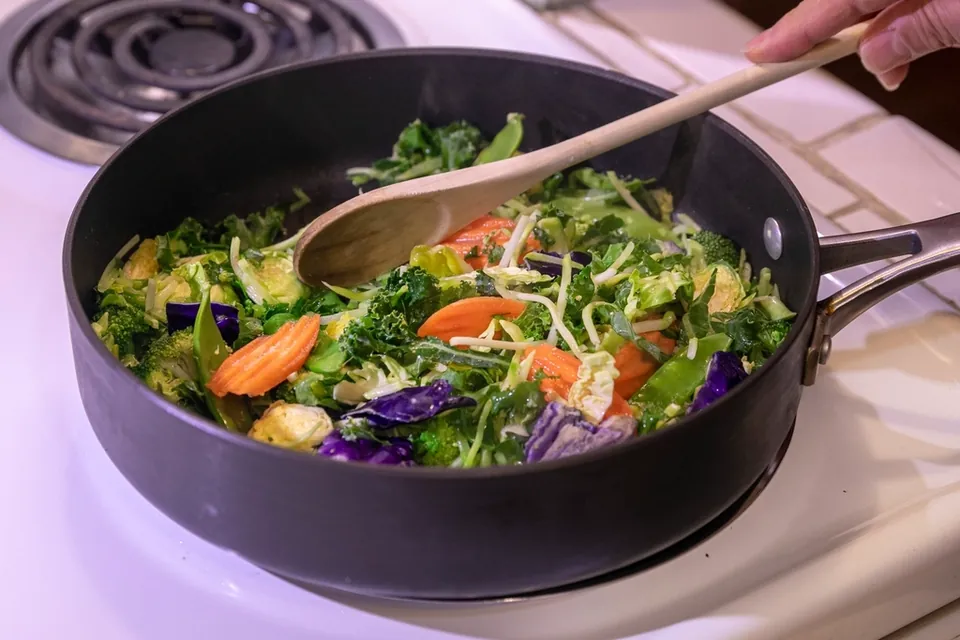
Scanpan CTX vs Professional
Two ways to build a nonstick pan: clad stainless or cast aluminium, compared on heat, weight and induction.
 Ingredients & technique
Choux pastry, explained
Weights, the panade, the egg 'V', steady oven heat, and why choux collapses, with fixes.