Scanpan CTX vs Professional: Clad Stainless or Cast Aluminium Under the Nonstick?
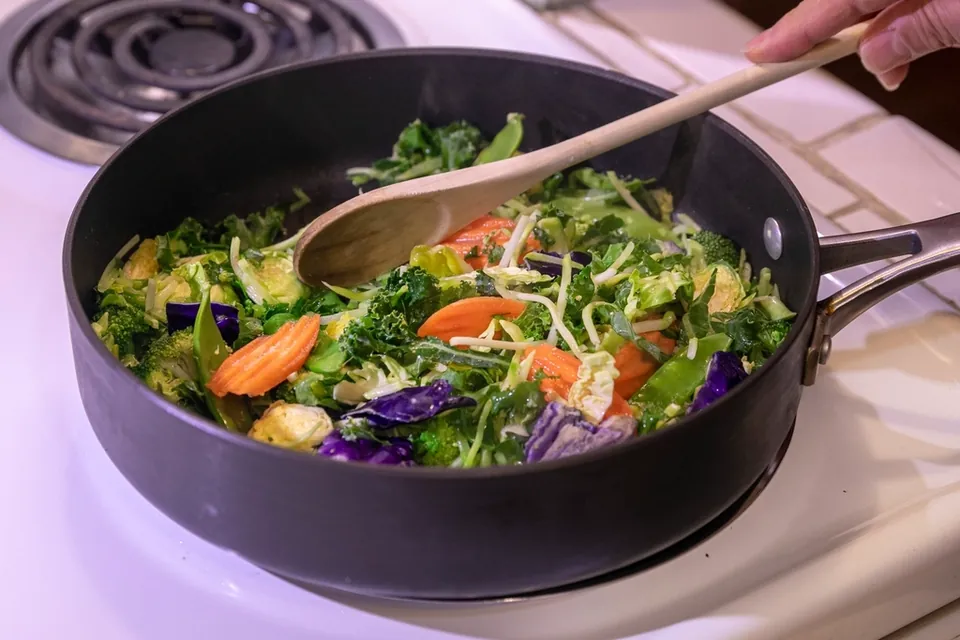
Scanpan, a Danish cookware maker, sells several nonstick ranges that look alike in photos but are built very differently underneath. Two that are often compared are CTX, with a multi-layer stainless steel and aluminium body, and Professional, with a cast aluminium body and stainless steel handles. Both use the company's Stratanium nonstick surface. The real choice is between two ways of building a pan, and that choice applies to any brand.
Hob & Ember has no affiliation with Scanpan or any retailer. Details below come from manufacturer and retailer descriptions, which differ between markets and over time. Check the product information for the exact item.
Two ways to build a nonstick pan
| Clad stainless (CTX type) | Cast aluminium (Professional type) | |
|---|---|---|
| Body | Layers of stainless steel and aluminium bonded together up the sides | Aluminium cast under pressure into a thick, solid body |
| Exterior | Brushed stainless steel | Coated or anodised-look aluminium |
| Heating | Aluminium core spreads heat; stainless slows response slightly | Fast, even heating thanks to aluminium's high conductivity |
| Induction | Yes (magnetic stainless exterior) | Only with a bonded magnetic base; check the item |
| Weight | Heavier for a given size | Lighter for a given size |
| Warping risk | Low | Low for thick cast bodies |
| Oven use | Retailers commonly list up to about 260 °C (500 °F) | Retailers commonly list up to about 260 °C (500 °F) |
Aluminium conducts heat far better than stainless steel, which is why it is used as the core of clad pans and the whole body of cast pans. Stainless steel adds durability, a magnetic exterior for induction and a classic look. A thick cast aluminium pan heats quickly and evenly on gas or radiant electric hobs; a clad pan is the natural choice for induction.
The nonstick surface
Scanpan describes Stratanium as a multi-layer nonstick system with a hard, textured base layer, designed to be more durable than a smooth single coating and resistant to metal utensils. Retailers describe both CTX and Professional pans as using it, although the exact generation of coating can differ between production years. Two general points apply to every PTFE-type nonstick coating, whatever the brand:
- It is stable at normal cooking temperatures, but should not be heated empty on high heat. Breakdown is commonly cited to begin above about 260 °C (500 °F), producing fumes that are harmful to pet birds and can cause flu-like symptoms in people.
- It is a wear item. Even durable coatings gradually lose release properties, faster with high heat, abrasive cleaning and dishwashers.
If you want to avoid fluoropolymer coatings altogether, consider carbon steel, cast iron or uncoated stainless steel instead; see our crepe pan guide for seasoning carbon steel.
Handles, lids and practicalities
- Both lines use stainless steel handles, which allow oven use but get hot; keep an oven glove nearby.
- Riveted handles are strong, but rivets on the inside of the pan collect residue; clean around them.
- Glass lids are convenient but generally have a lower oven limit than the pan; check the lid separately.
- Weight matters with larger sizes. Lift a 28 cm pan with one hand as you would to tip out food; if that feels hard, a lighter body will be easier to live with.
Test any nonstick pan at home
- Induction check. Hold a fridge magnet to the base. If it grips firmly, the pan works on induction.
- Flatness. Lay a straight edge across the base, inside and out. A rocking or domed base gives poor contact on induction and glass-ceramic hobs.
- Egg release. On medium heat with a little butter, fry an egg. It should slide when the pan is tilted once the white sets. Repeat monthly as a simple wear test.
- Hot spots. Sprinkle flour evenly over the dry pan on medium heat and watch where it browns first.
- Heat-up time. Time how long 250 ml of water takes to simmer on the same burner and setting. It shows the difference between a fast aluminium body and a slower clad one.
Care that extends coating life
- Cook on low to medium heat; nonstick pans rarely need high heat, and searing is better done in uncoated pans.
- Use a little fat. Cooking spray can leave a sticky residue that builds up on coatings.
- Let the pan cool before washing; do not plunge a hot pan into cold water.
- Hand-wash with a soft sponge, even if the maker says dishwasher-safe; dishwasher detergents are abrasive and alkaline.
- Stack with a cloth or protector between pans.
- Replace a pan when the coating is visibly flaking or food sticks persistently despite proper cleaning.
Which suits whom
- Induction hob, want durability and a stainless look: a clad design such as CTX.
- Gas or radiant electric hob, want light and fast: a cast aluminium design such as Professional.
- Mixed: one good clad nonstick pan for eggs and fish, plus uncoated pans for searing, is a versatile set-up.
Sources
- Scanpan, product information and care instructions.
- US Food and Drug Administration, Authorized uses of PFAS in food contact applications.
 Pans & bakeware
Choosing a crepe pan
Carbon steel, cast iron or nonstick: diameter, flatness, seasoning and a simple flour test for even heat.
 Pans & bakeware
Bubble waffle makers
Stovetop or electric, plate depth and coatings, and a batter that turns out crisp, hollow bubbles.
 The kitchen
Organising a kitchen
Work zones, a fridge set to 4 °C, pantry rotation and the date-label rules, step by step.