Bubble Waffle Makers: Stovetop or Electric, Coatings, and How to Get Crisp Egg Waffles
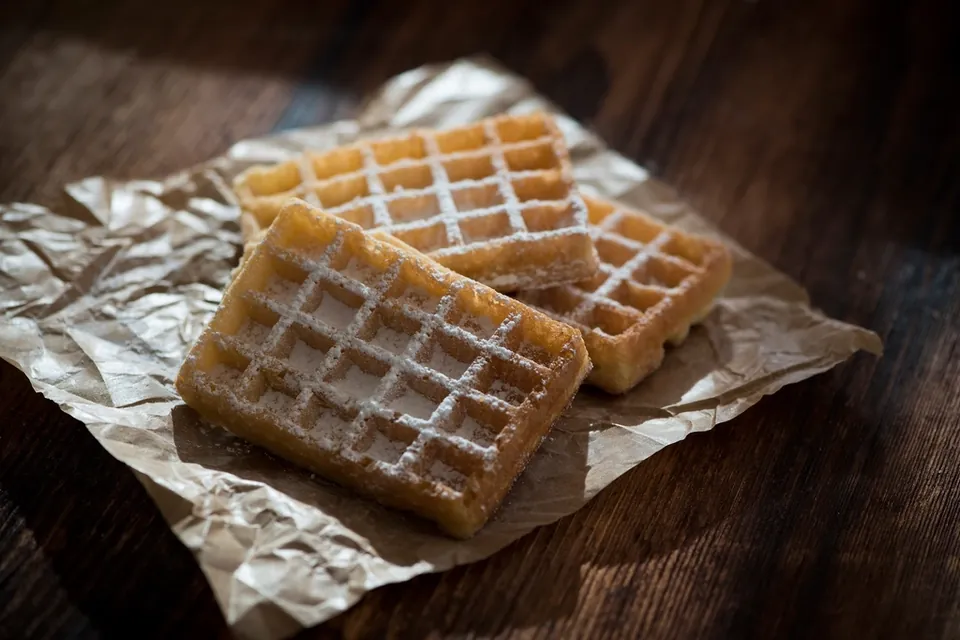
Bubble waffles, known in Hong Kong as egg waffles or gai daan jai, are a street snack of crisp, golden spheres joined by a thin lacy sheet, soft and hollow inside. They are cooked in a special hinged iron with two plates of hemispherical cells. Whether you choose a traditional stovetop pan or an electric maker, the same things decide success: plate depth, heat, coating and a quick flip.
A Hong Kong street snack
The bubble waffle is better known in Hong Kong as gai daan jai, "little chicken eggs", after the egg-shaped pockets. As the Wikipedia article on the egg waffle summarises from Hong Kong press sources, it has been a favourite street snack since the 1950s, when it was cooked over coal fires and sold from street kiosks; its exact origin is unknown. That history explains the two families of makers you find today: the hand-held, hinged cast iron or aluminium pans descended from those kiosk moulds, and the electric flip makers designed for home counters and cafés.
Stovetop or electric?
| Stovetop pan | Electric maker | |
|---|---|---|
| Heat source | Gas flame best; some work on electric or induction | Built-in element, thermostat |
| Flipping | Flip the whole pan by its handles | Many models rotate on a stand to spread batter |
| Crispness | Excellent once heat is mastered | Good; depends on power and plate material |
| Learning curve | Steeper | Gentle |
| Cleaning | Whole pan can be wiped or washed (per material) | Plates usually fixed; wipe only, unless removable |
| Storage | Flat, compact | Bulkier, with cable |
Traditional Hong Kong stalls use heavy cast-iron pans over strong gas flames. At home, a lighter aluminium stovetop pan is easier to flip; check that it is suitable for your hob. Induction use needs a magnetic base, which most aluminium pans lack.
What to look at in the plates
- Cell depth and shape. Deeper, rounder cells give the characteristic hollow spheres. Shallow cells give something closer to a flat waffle with bumps.
- Even closure. The two plates must meet evenly all round; gaps let batter leak and leave pale areas.
- Latch and hinge. A firm latch holds the plates together when you flip. A loose hinge lets the top plate slide.
- Handles. On stovetop pans, long handles with heat-resistant grips keep hands away from the flame.
- Power. On electric makers, more power generally means faster recovery between batches. Wattage is not standardised in meaning, so compare reheat times in reviews and manuals where given.
Coatings
Most bubble waffle makers have a nonstick coating, usually PTFE-based or ceramic. PTFE is stable at normal cooking temperatures but degrades if a pan is heated empty to very high temperatures, commonly cited as above about 260 °C (500 °F). Stovetop pans on a strong flame can reach that quickly when empty, so preheat on medium and add batter once the pan is hot, not smoking. Uncoated cast iron must be seasoned like a skillet, and the first batches may stick until the seasoning builds up.
Test a maker at home
- Browning map. Make a first waffle following the manual and look at it in good light. Pale spheres at one side or the edges show uneven heating; on a stovetop pan, move it around the flame or adjust the burner.
- Fill test. Weigh the batter you use. A good maker fills every cell with about the same amount every time; note the weight that gives a full waffle with no leaking.
- Release. After cooking, the waffle should lift off with a fork or chopstick without tearing.
- Recovery. Time how long between waffles until the next one browns as well as the first. That tells you how practical it is for a family.
- Handles and latch. After ten minutes of use, check how warm handles and latch get.
A classic batter
Recipes vary; this is a widely used style that gives crisp shells and a tender interior. It makes about four waffles in a standard pan.
- 140 g plain flour
- 20 g tapioca starch, cornflour or custard powder
- 2 teaspoons baking powder
- 80 to 100 g sugar
- 2 eggs
- 160 ml evaporated milk and 60 ml water (or 220 ml milk)
- 2 tablespoons neutral oil, a few drops of vanilla
Whisk the eggs with the sugar, add the milk, water, oil and vanilla, then whisk in the sifted dry ingredients until just smooth. Rest the batter for 30 minutes to an hour. Heat the pan, brush both plates lightly with oil, pour batter into the centre of the bottom plate until the cells are just filled, close, and flip immediately so batter runs into the top cells. Cook about two minutes per side on a stovetop pan, then open and check. Tip the waffle onto a wire rack and leave it for a minute: it crisps as it cools, and steam escapes rather than softening it.
Serving
Hong Kong egg waffles are often eaten plain and warm, torn into spheres. In many cafés they are rolled into a cone and filled with ice cream, fruit and sauces. Fill at the last moment; moisture softens the shell quickly.
Care
- Let the maker cool, then brush out crumbs and wipe the plates with a damp cloth. Most electric makers must never be immersed.
- Stovetop nonstick pans: wash by hand with a soft sponge; avoid metal tools and abrasive pads.
- Cast iron: rinse with hot water, dry on the heat and oil lightly.
- Dried-on batter in cells comes away more easily if you close a damp, warm cloth inside the cooled maker for a few minutes.
Safety
Steam escapes from the edges when the batter hits hot plates, and flipping a stovetop pan over a flame demands attention. Keep children at a distance, use oven gloves for heavy cast iron, and never leave a hot electric maker on the edge of a counter with its cable hanging down.
Sources
- US Food and Drug Administration, Authorized uses of PFAS in food contact applications.
- US Consumer Product Safety Commission, small kitchen appliance safety and recalls.
 Pans & bakeware
Choosing a crepe pan
Carbon steel, cast iron or nonstick: diameter, flatness, seasoning and a simple flour test for even heat.
 Pans & bakeware
Scanpan CTX vs Professional
Two ways to build a nonstick pan: clad stainless or cast aluminium, compared on heat, weight and induction.
 Ingredients & technique
Choux pastry, explained
Weights, the panade, the egg 'V', steady oven heat, and why choux collapses, with fixes.