Black Garlic: What It Is, How It Is Made, and How to Make and Use It Safely at Home
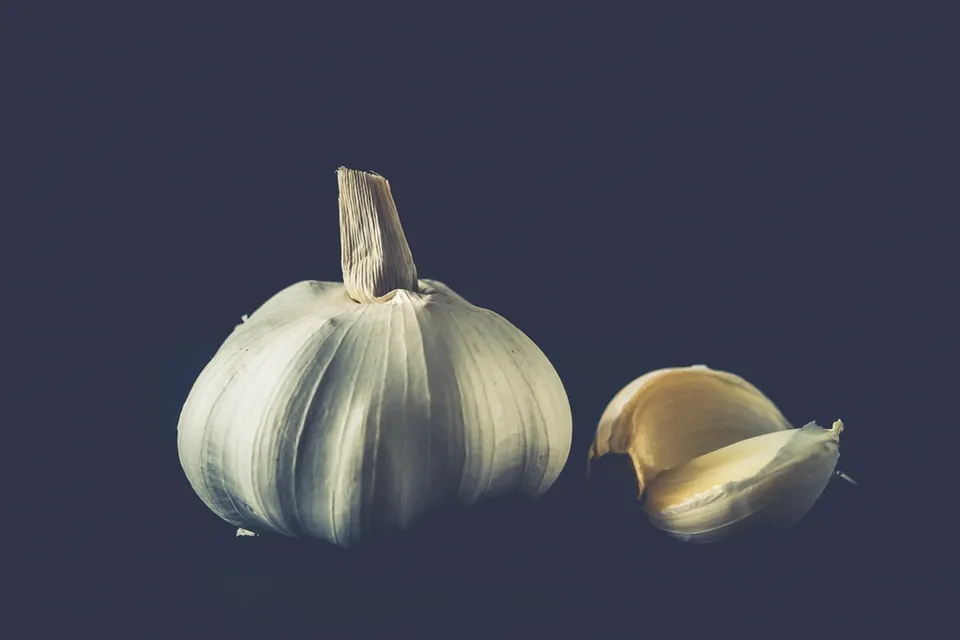
Black garlic looks burnt and tastes nothing like raw garlic: soft, sticky cloves with notes of balsamic vinegar, dried fruit, tamarind and liquorice, and almost none of the sharp bite. It is ordinary garlic transformed by weeks of gentle heat and humidity. You can buy it, or make it at home with patience, a warm appliance and somewhere the smell will not bother anyone.
What happens to the garlic
Raw garlic's pungency comes from allicin, which forms when cloves are crushed and an enzyme (alliinase) acts on a sulfur compound called alliin. When whole bulbs are held warm for a long time, that enzyme is gradually deactivated, so the sharp compounds never form in the same way. Meanwhile, sugars and amino acids in the cloves react slowly in the Maillard reaction, the same family of browning reactions that colours bread crusts and seared meat. Over weeks, the cloves turn from ivory to tan to jet black, soften to the texture of a soft dried fig, and develop sweet, savoury and acidic notes.
The word "fermented" is widely used on packaging, and some producers do describe microbial involvement, but the research literature generally describes black garlic processing as a thermal process in which non-enzymatic browning dominates. Either way, nothing needs to be added: only garlic, heat, humidity and time.
What it tastes like and how to use it
The flavour is sweet, tangy and deeply savoury, closer to a reduced balsamic or a prune than to fresh garlic. Because it is soft, it mashes easily into a paste.
- Mash cloves with butter for steak, roasted vegetables or toast.
- Blend into vinaigrettes, mayonnaise or yoghurt dips.
- Stir into risotto, pan sauces and gravies near the end of cooking.
- Slice thinly over pizza, salads or cheese boards.
- Whisk into a glaze with soy sauce and honey for grilled meat.
Start small: a clove or two goes a long way in a dish for four.
Making black garlic at home
The method most home cooks use is a rice cooker on "keep warm", which typically holds somewhere around 60 to 75 °C. A slow cooker on its lowest setting, a dehydrator that goes warm enough, or a dedicated black garlic fermenter also work. Ovens are rarely practical: few hold such a low temperature accurately, and running one for weeks is costly.
- Choose the garlic. Use firm, unbroken whole bulbs with no soft spots or sprouting. Larger cloves give juicier results. Do not peel or separate them.
- Keep them dry outside, moist inside. Wrap each bulb loosely in foil, or place them on a rack in the cooker, so they do not sit in condensation. Some cooks add a small dish of water for humidity; others find the garlic's own moisture enough.
- Set and leave. Close the lid and switch to "keep warm". Check every few days that the appliance is still on and that nothing is burning or drying out.
- Taste. After about two weeks, open a clove. It should be black through, soft and sweet. Many batches need three to four weeks; drier, lower-heat set-ups can take longer.
- Dry slightly. Let the finished bulbs air-dry for a day or two at room temperature to firm up the texture before storing.
Test your set-up first
- Check the temperature. Put a probe thermometer inside the closed cooker on "keep warm" for an hour. Somewhere in the 60 to 75 °C range is typical; above about 85 °C the outside can scorch and turn bitter before the inside darkens.
- Check the appliance. Running a small appliance continuously for weeks is unusual. Use one in good condition, on a clear, heat-resistant surface, plugged directly into a wall socket rather than an extension lead, away from curtains and anything flammable.
- Choose the place. The smell is strong for the first week or more. A garage, utility room or covered balcony with a safe socket is ideal.
Storage and food safety
Whole, finished black garlic bulbs are much drier and more acidic than raw garlic. Commercial products state their own storage conditions; follow the label. For homemade black garlic, keeping peeled cloves in a sealed container in the refrigerator, and freezing anything you will not use within a few weeks, is a sensible, cautious approach. Discard any garlic that shows mould or smells off.
One rule applies to all garlic: do not store garlic covered in oil at room temperature. Garlic can carry spores of Clostridium botulinum, and the low-oxygen environment under oil lets them produce toxin. The National Center for Home Food Preservation advises refrigerating homemade garlic-in-oil and using it within a few days, or freezing it. The US Centers for Disease Control and Prevention explains the symptoms of botulism, which is a medical emergency.
What the health research says
Studies have found that black garlic contains more S-allyl cysteine and higher measured antioxidant activity than fresh garlic, and laboratory and animal studies have explored effects on cholesterol, blood sugar and inflammation. Human trials are few and small. There is not enough evidence to say that eating black garlic prevents or treats any disease. If you take blood-thinning medicines, ask a pharmacist before eating large amounts of any garlic product.
Buying black garlic
- Look for plump, glossy, soft cloves; very hard, dry cloves are over-processed.
- Whole bulbs keep longer than peeled cloves.
- Pastes and purées are convenient; check whether they need refrigeration after opening.
Sources
- National Center for Home Food Preservation, University of Georgia, guidance on garlic in oil and flavoured oils.
- Centers for Disease Control and Prevention, Botulism.
- Kimura S. et al., "Black garlic: A critical review of its production, bioactivity, and application", Journal of Food and Drug Analysis, 2017.
 Ingredients & technique
Choux pastry, explained
Weights, the panade, the egg 'V', steady oven heat, and why choux collapses, with fixes.
 The kitchen
Organising a kitchen
Work zones, a fridge set to 4 °C, pantry rotation and the date-label rules, step by step.
 Grill & smoke
Smoking woods
Oak, hickory, mesquite or fruitwood: which suits brisket and chicken, and how to get clean, thin smoke.